Incorporating Native Plants into Your Urban Garden
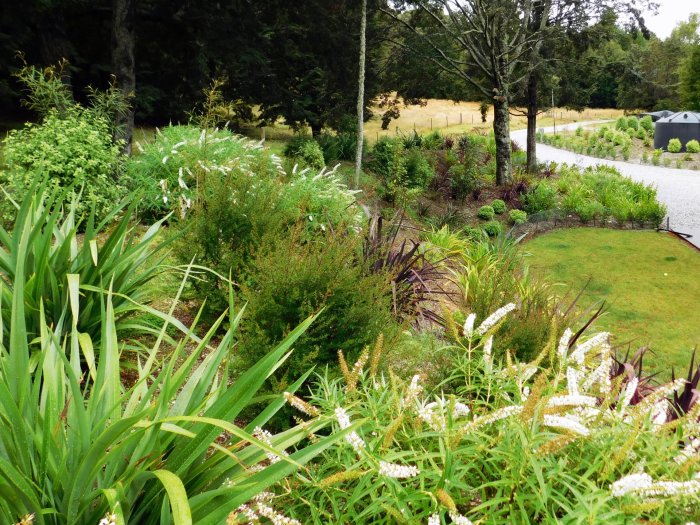
Incorporating Native Plants into Your Urban Garden: Design Tips and Tricks
Urban gardening can be rewarding, especially when incorporating native plants. Not only do native plants bring a sense of place and local flavour to your garden, but they also support local ecosystems. Here are some practical design tips for urban gardeners looking to include New Zealand natives in their small spaces.
Why Choose Native Plants for Urban Gardens?
Choosing native plants for your urban garden can be a wonderful way to create a space that feels truly connected to New Zealand. If you're passionate about local flora, native plants offer a fantastic opportunity to take advantage of their natural beauty and resilience. If you’ve had mixed results with natives in the past, or you’re simply not drawn to them, that’s perfectly okay. The key is to select plants that will give you the look you desire, work within your space, and suit your local climate.
Three Things You Need To Know When Planting Natives
Right Plant, Right Place: Like any other plants, the success of native plants in your garden hinges on placing them in the right spot. Consider the amount of sunlight, soil type, and moisture levels each plant needs to thrive. Hebe Wiri Mist prefers a sunny spot with well-drained soil for example, while Pseudowintera Red Leopard thrives in shaded areas with moist soil.
Size Matters: Ensure that the size of the plant will fit the space you have available once it’s fully grown. This will prevent overcrowding and allow each plant to flourish.
-
Smaller Hedge (0.75-1.2m tall): Corokia is perfect for creating a lower hedge in an urban garden.
-
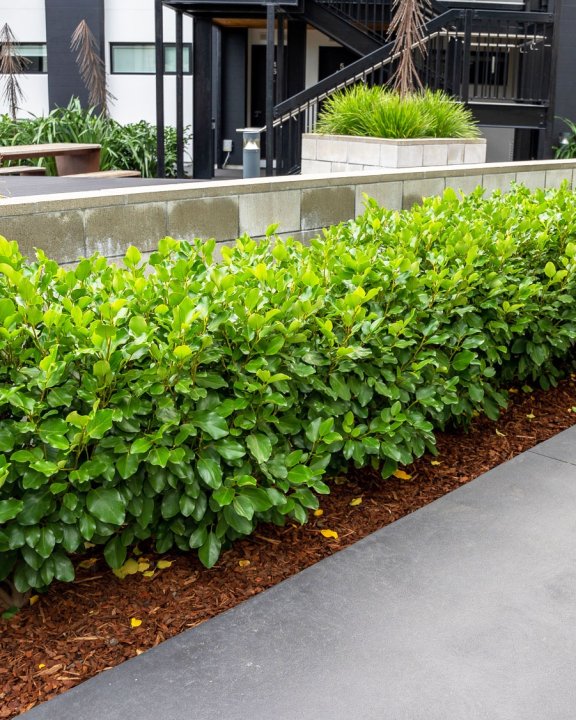
Larger Hedge (1.2-2m tall): Griselinia littoralis makes an excellent larger hedge, providing privacy and structure.
-
Smaller Cultivars: Ideal for urban gardens, these include Libertia peregrinans, Pittosporum Pom Pom, Pseudowintera Red Leopard, Clematis paniculata, and Hebe Wiri Mist
Make Them Work for You: Create a low-maintenance garden by combining plants that complement each other visually and functionally to prevent overcrowding and continue to be attractive as they grow.
-
Layering: Use taller plants like Lancewood (Pseudopanax crassifolius) at the back, medium-height plants like Griselinia littoralis in the middle, and groundcovers like Acaena inermis Purpurea at the front. Layering for depth prevents an overcrowded mess and ensures each plant has room to grow.
-
Maintenance: Incorporate groundcovers to minimise maintenance. Groundcovers help suppress weeds and reduce the need for mulching.
-
Trimming and Care: Know how to look after your plants, including when to trim them to keep them suitable for the site. Regular maintenance ensures that plants stay within the confines of your garden space.
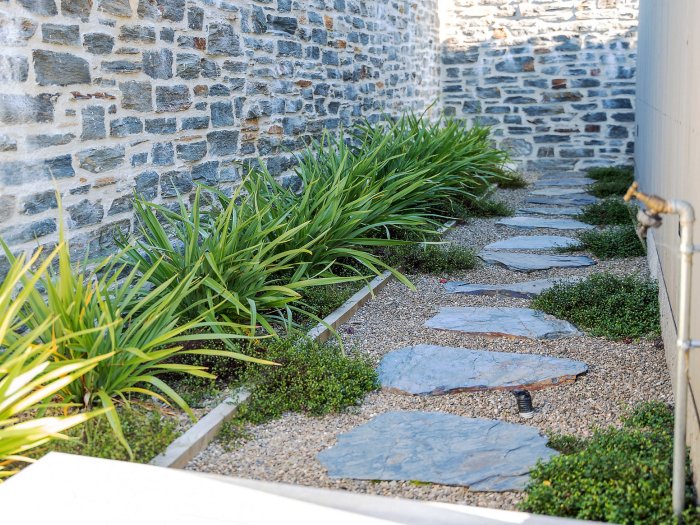
Practical Design Tips
-
Using Containers: If ground space is limited, use containers to add greenery. Containers can be moved around to suit your design and can accommodate a variety of plants. For instance, Hebe Emerald Gem and Carex testacea do well in pots and can add texture and colour to patios or balconies.
-
Vertical Gardening: Grow up with vertical space by installing trellises or living walls. Plants like Muehlenbeckia complexa and Clematis paniculata can be trained to climb, creating green walls that maximise space. Vertical gardening is also great for narrow spaces.
-
Shade Gardening: Many native plants thrive in shaded areas. Ferns like Asplenium and Dicksonia can add lush greenery to shady spots, while the Chatham Island Lily (Myosotidium hortensia) provides beautiful blooms in low light.
Plant Combinations that Work
Here are three plant combinations I like, that may help inspire your garden design:
-
Sunny Spot Combination: Create a striking visual effect with Lancewood (Pseudopanax crassifolius), Phormium Emerald Gem, and Hebe Wiri Mist. The tall, slender form of the Lancewood contrasts beautifully with the broad, arching leaves of the Phormium and the compact, flowering Hebe. Add Libertia grandiflora for additional texture and seasonal interest. Learn more about these plants here.
-
Shade Combination: For shaded areas, consider Dicksonia squarrosa (Tree Fern), Muehlenbeckia axillaris, Blechnum discolor (Crown Fern), and Arthropodium cirratum (Renga Renga Lily). The lush fronds of the Tree Fern provide a canopy, under which the delicate Muehlenbeckia and Crown Fern can thrive, complemented by the striking flowers of the Renga Renga Lily. Discover more about these shade-loving plants here.
-
Narrow Space Combination: Use vertical space and slim profiles with Phormium Emerald Gem and Muehlenbeckia axillaris. The compact, upright growth habit of the Phormium is perfect for narrow gardens, while the creeping Muehlenbeckia can fill in gaps and soften edges, creating a cohesive and space-efficient design. Tall plants like Lancewood (Pseudopanax crassifolius) and Griselinia littoralis are also excellent choices for narrow gardens or along pathways. Ensure these plants stay within the confines of the garden either by selecting naturally compact varieties or by regular trimming.
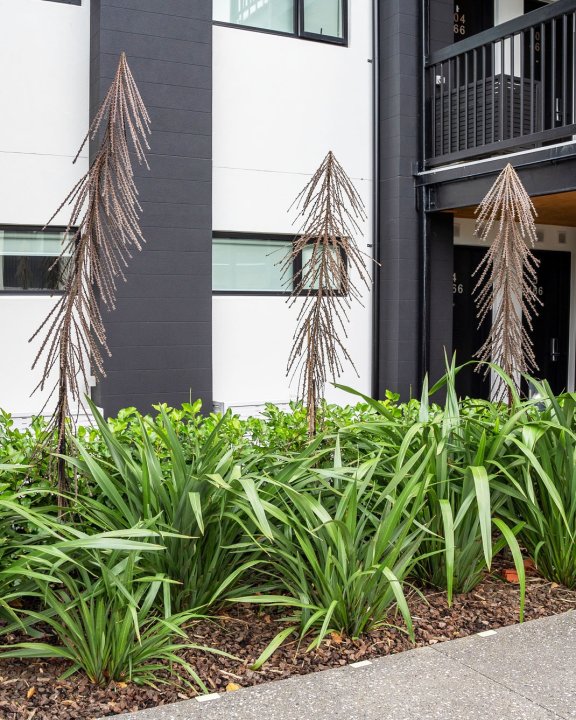
Popular NZ Native Plants for Urban Gardens
While you might think of towering trees when considering New Zealand's native flora, there are many options suitable for smaller urban gardens. Here are some categories and examples to inspire your planting. Click the plant names to learn more:
Trees
-
Ribbonwood (Plagianthus regius)
-
Lancewood (Pseudopanax crassifolius)
-
Cabbage Tree (Cordyline australis)
Shrubs
Flaxes and Grasses
Groundcovers
Shade-Loving Plants
-
Ferns (e.g., Asplenium spp., Dicksonia spp.)
-
Chatham Island Forget-Me-Not (Myosotidium hortensia)
Hedging Plants
Creating a Native-Themed Garden
By choosing the right mix of trees, shrubs, flaxes, grasses, and groundcovers, you can create a visually appealing and functional garden space entirely composed of native plants. Use Griselinia littoralis for hedging to provide structure and privacy, while incorporating a mix of Pittosporum and Hebe for mid-level planting and texture. Add interest with colourful flaxes and the delicate foliage of ferns and Chatham Island lilies for shaded areas.
The options are endless, and with thoughtful planning, you can create a stunning urban garden that celebrates New Zealand's unique flora.
RELATED PRODUCTS
 Notify Me