The Beauty of Autumn: A Guide to Autumn Colour
The Beauty of Autumn: A Guide to Autumn Colour
As the days get shorter and the weather turns cooler, it's clear that autumn has arrived. This season has a rich history that can be traced back to ancient civilisations, where it was associated with the harvest, abundance, and the beginning of hibernation for plants and animals alike. One great way to keep your garden interesting after summer is by incorporating autumn colours. The vibrant hues of orange, red, and yellow that are typical of autumn foliage add to the seasonality of any landscape. Additionally, autumn plants provide practical benefits. Many require little water and are low-maintenance, making them perfect for long, hot summers that stretch into autumn. These plants can also attract beneficial insects, such as bees and butterflies, which help to pollinate other garden plants. Below, I've shared a few of my favourite plants that can be used in almost any setting. Click on the plant names to learn more!
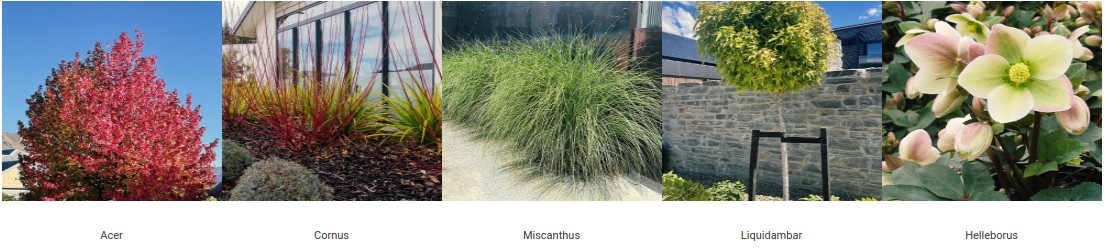
Acer Jeffersred: This autumnal giant, also referred to as The Red Maple, is known for its fiery red display of colour during autumn. Jeffersred maintains an attractive form and is one of the hardiest Maples you can plant.
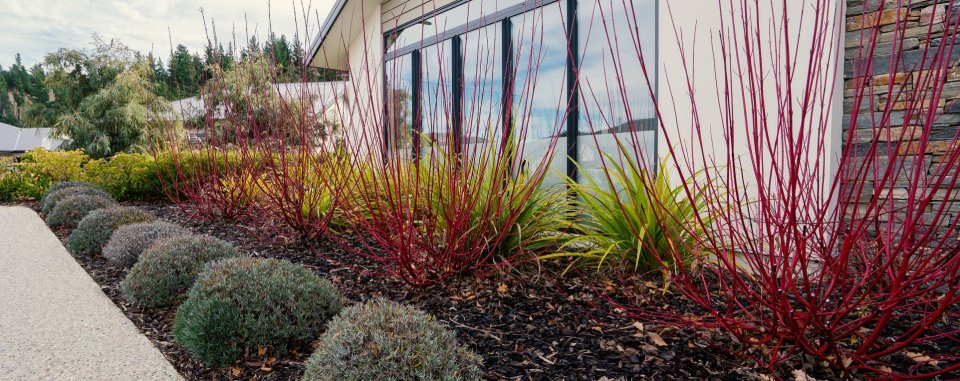
Cornus alba Sibirica: Also known as Red-Stemmed Dogwood, this deciduous shrub is prized for its lively red bark, which provides a striking contrast against its bronze autumn foliage. Cornus alba is super easy to grow and maintain, simply give it a hard prune in early spring each year. This will ensure it retains its vibrant colours for the following season.
Miscanthus sinensis: This elegant ornamental grass produces slender, arching leaves that turn a golden-brown colour during autumn. Its architectural form makes a statement, reaching a height of 1.5m+ each season that holds true throughout winter before its early spring chop.
Liquidambar Gumball: This is a perfect solution if you love Liquidambar trees, but don’t have the space required to accommodate them. Gumball is a select form, grown on a clear stem to achieve a topiary visual. However, just like its big brothers, its autumn colour is second to none. Shades of gold, blood orange, and merlot make this plant a standout during winter. It is wonderful in a pot too, if you only have a balcony space available.
Helleborus Ivory Prince: Winter Roses need no introduction. They are a favourite among gardeners far and wide, prized for their ability to brighten up a dark area, on a dreary winter's day. Helleborus Ivory Prince has an extraordinarily long flowering period, blooming from mid-autumn through until the following spring. It is often the hardest-working plant in the garden, requiring the least attention.
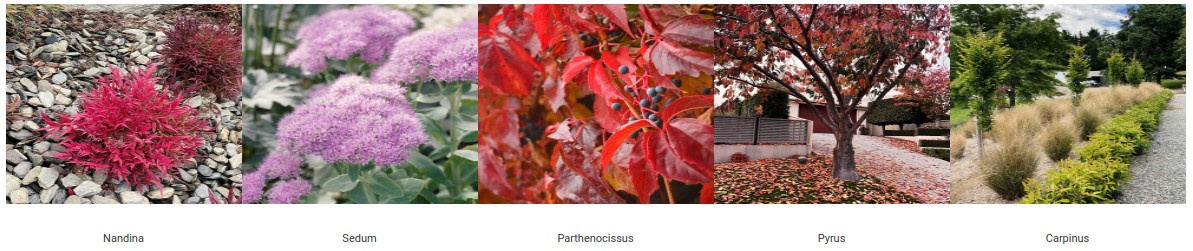
Nandina Gulfstream: It is often overlooked when we talk about autumn colour. Why this is, however, is a mystery. It may not be the showiest plant in the garden, but it is just as eye-catching as any when autumn rolls around. As the weather cools down, its colour intensifies to shades of copper, orange, and red. I love using it in borders or as a low hedge. The colours are spectacular and an asset to the autumn landscape.
Sedum Autumn Joy: Possibly the hardiest of all perennials and the keys in the name here. Sedum Autumn Joy is a reliable performer that produces its signature blooms during March and April, which are clusters of tiny, star-shaped flowers in shades of rose pink. This plant is one of the best late-season food sources for visiting pollinators, including bumble bees.
Parthenocissus quinquefolia: Also known as Virginia Creeper, is renowned for its autumn display. It is fabulous for covering a wall, climbing a trellis, or helping to obscure an area in the garden you want to screen. During autumn, its foliage finishes at a deep burgundy colour, not dissimilar to a glass of Central Otago Pinot Noir - what’s not to like!?
Pyrus Aristocrat: The Ornamental Pear is the classic avenue tree for a tree-lined driveway. It is also equally effective as a stand-alone specimen tree, due to the classic pyramid shape it forms. Pyrus Aristocrat is more commonly grown for its spring flowers, but I think they are even better in autumn. The fresh green summer foliage gradually transitions to shades of yellow, orange, and red. It is an easy-to-grow tree, tolerant of most conditions, including high wind zones.
Carpinus betulus Fastigiata: Commonly known as the European Hornbeam, this deciduous tree produces golden-yellow foliage during autumn and then holds onto its leaves over winter - extending the seasonal display. It takes a columnar shape and its tolerance to almost any setting makes it a favourite. Try using it as a driveway tree or for pleaching.