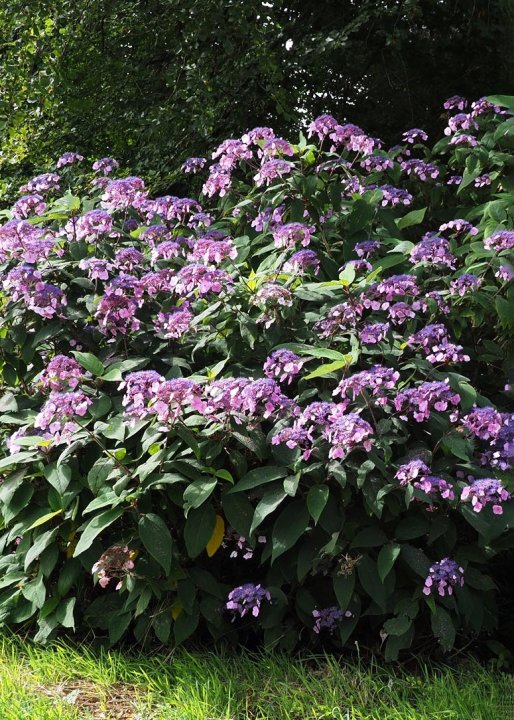
Hydrangea villosa
Hydrangea villosa is a distinctive deciduous shrub with velvety leaves and large, lacecap flowers that range from soft pink to pale blue, depending on the soil pH. The foliage, with its hairy texture, adds a unique tactile element to the garden, and the delicate flowers, which appear from late summer to autumn, provide a subtle yet elegant display.
Hydrangea villosa thrives in shaded or partially shaded garden areas, making it an excellent choice for woodland gardens, mixed borders, or as a specimen plant. It prefers rich, well-drained soil that retains moisture without becoming waterlogged. This variety is ideal for creating a serene and naturalistic setting. Regular watering is essential to maintain the plant's health, particularly during dry periods. Ensuring slightly acidic to neutral soil will help achieve the best flower colours.
When planting Hydrangea villosa, space plants about 2 to 3 metres apart to accommodate their mature spread. This allows each plant to develop fully without overcrowding. At maturity, Hydrangea villosa reaches a height and spread of approximately 2.5 to 3 metres, forming a gracefully arching shrub that brings texture and gentle beauty to garden landscapes.
Trimming: Prune Hydrangea villosa in late winter or early spring before new growth begins. Remove any dead, damaged, or weak stems, and lightly shape the plant to maintain its form. Avoid heavy pruning to preserve future flowering.
Deadheading: Remove spent flowers regularly to encourage continuous flowering and maintain a tidy appearance. Cut the flower stems just above the first set of healthy leaves.
Fertilising: Apply a balanced, slow-release fertiliser in early spring to support healthy growth and abundant flowering. Follow the manufacturer's instructions for the correct dosage. A second light feeding in mid-summer can help prolong the flowering period.
Watering: Water regularly, especially during dry periods, to keep the soil consistently moist but not waterlogged. Hydrangea villosa prefers well-drained soil. Apply mulch around the base to retain moisture and regulate soil temperature.
Pest Control: Monitor for common pests such as aphids, spider mites, and scale insects. Treat infestations with insecticidal soap or neem oil. Watch for slugs and snails, using pellets or traps to control them if necessary.
Disease Management: Ensure good air circulation around the plant to prevent fungal diseases such as powdery mildew and leaf spot. Avoid overhead watering to reduce the risk of these diseases. Remove and destroy any affected leaves and treat with a fungicide if necessary. Maintain good garden hygiene to minimise disease risk.
Enjoy complimentary delivery anywhere in mainland New Zealand when you purchase plants worth $250 or more*.
For orders below $250, the following flat-rate delivery charges are applicable:
- Urban delivery within mainland New Zealand: $19.95
- Rural delivery within mainland New Zealand: $39.95
- Waiheke, Chatham and Great Barrier Islands: Please contact us for shipping options.
We aim to have all orders shipped within 14 days from the order date, unless a different shipping date is specified alongside a product.