Ceanothus Blue Sapphire
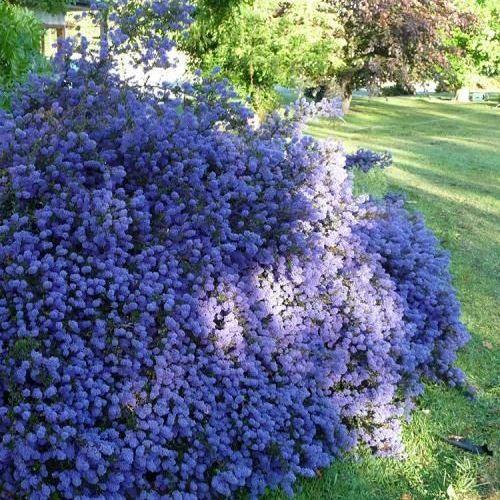
Ceanothus Blue Sapphire is an evergreen shrub prized for its glossy, dark green foliage and masses of rich blue flowers that appear in Spring and into early Summer, creating a vivid burst of colour and attracting bees and other beneficial insects.
It’s ideal as a feature shrub, for low informal hedging, or planted en masse on banks and sunny borders where it can form a dense, wind-tolerant low screen. It also suits coastal gardens and Mediterranean-style planting, pairing well with grasses, lavenders and other drought-tolerant companions.
Plant in full sun to light shade in free-draining soil; avoid heavy, waterlogged ground. Once established it is reasonably drought-tolerant, though it benefits from occasional deep watering during very dry Summer periods. Space plants about 1.5-2 m apart to allow for airflow and a naturally broad habit, and prune lightly after flowering to maintain shape.
Mature size is typically around 0.75-1.5 m tall and 1-2 m wide, forming a dense, rounded to spreading evergreen shrub.
Trimming: Trim straight after flowering to keep it compact and prevent it getting woody. Shorten finished flowering shoots by a third and thin lightly to maintain airflow. Avoid hard pruning into old, bare wood (it often won’t reshoot well). If grown against a fence/wall, tie in and lightly tip-prune to keep a neat, even cover.
Deadheading: Not usually necessary. A light post-flowering trim effectively removes spent flowerheads and tidies the plant in one go.
Fertilising: Feed lightly in early spring with a low-phosphorus, balanced fertiliser or a slow-release general fertiliser. Avoid heavy feeding and high-nitrogen products, which can cause soft, sappy growth and fewer flowers.
Watering: Water regularly during establishment (first 12 months), especially through summer. Once established, water only during extended dry periods. Ceanothus prefers free-draining soil and can sulk in constantly wet ground. Mulch to reduce moisture loss, but keep mulch off the crown.
Pest control: Watch for aphids on new growth (sticky honeydew, curled tips) and treat with a firm water spray or insecticidal soap if numbers build. Check for scale on stems; use horticultural oil, ensuring good coverage.
Disease management:
-
Root rot (waterlogging): Yellowing, wilting despite moist soil, sudden dieback. Improve drainage, avoid overwatering, and don’t plant in heavy, wet sites.
-
Leaf spot/mildew (in humid, still conditions): Marked spotting or a powdery coating on leaves. Remove affected foliage, improve airflow with light thinning, and avoid overhead watering; use a suitable fungicide if it persists.
Enjoy complimentary delivery anywhere in mainland New Zealand when you purchase plants worth $250 or more*.
For orders below $250, the following flat-rate delivery charges are applicable:
- Urban delivery within mainland New Zealand: $19.95
- Rural delivery within mainland New Zealand: $39.95
- Waiheke, Chatham and Great Barrier Islands: Please contact us for shipping options.
We aim to have all orders shipped within 14 days from the order date, unless a different shipping date is specified alongside a product.