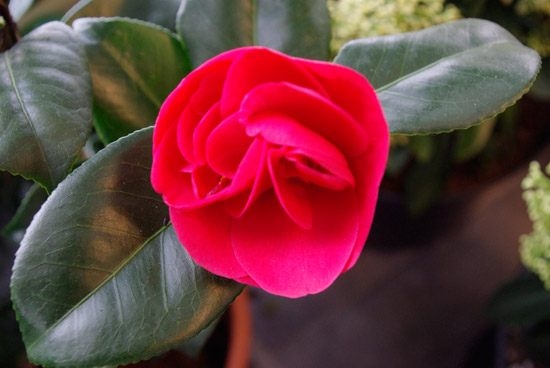
Camellia Curly Lady
Camellia Curly Lady is an evergreen shrub grown for its richly ruffled, double flowers set against glossy, deep green foliage. Flowering from late Winter into Spring, it adds reliable colour at a time when much of the garden is still quiet.
It suits use as a feature shrub in borders, a dense screen or informal hedge (lightly shaped after flowering), and it also performs well in large pots where drainage is dependable. It pairs especially well with woodland-edge planting and layered garden beds.
Plant in bright filtered light or morning sun with afternoon shade, sheltered from hot sun and drying winds. Provide fertile, free-draining, slightly acidic soil and keep moisture even through Summer; mulching helps retain moisture and keeps roots cool. Space plants about 1-1.5 m apart for airflow and a naturally full shape.
At maturity it typically forms a dense, rounded shrub around 2-3 m tall and 1.5-2.5 m wide.
Trimming: Lightly trim after flowering finishes to maintain the naturally compact, rounded shape and encourage bushiness. Remove any crossing or inward-growing shoots to keep air moving through the plant. If grown as a feature shrub, aim for a soft, natural outline rather than tight clipping.
Deadheading: Not essential, but you can pinch off spent flowers to keep the plant tidy and reduce petal drop on paths/decks. Remove any fallen petals from the canopy and ground to help keep fungal issues down.
Fertilising: Feed in early spring with an acid-loving fertiliser (camellia/azalea/rhododendron type). A second light feed in late spring is optional on poorer soils. Avoid heavy feeding in late summer/autumn, which can push soft growth.
Watering: Keep evenly moist while establishing (first 12-18 months), especially through late spring-summer. Once established, water deeply during extended dry periods and heatwaves; camellias dislike drying out completely. Mulch to conserve moisture and keep roots cool (keep mulch off the trunk).
Pest control: Watch for scale insects (small bumps on stems/leaf undersides) and sooty mould (black coating caused by honeydew). Treat scale with horticultural oil, thoroughly coating stems and leaf undersides; repeat as needed. Check for aphids on soft new growth and use insecticidal soap if populations build.
Disease management:
-
Petal blight (camellia flower blight): Flowers turn brown and mushy very quickly, often with a pale ring on petals. Remove and bin all affected flowers (don’t compost) and keep the area under plants clean.
-
Leaf gall: Puffy, pale-green swollen leaves that later turn white. Pick off and bin before they dry and release spores.
-
Dieback/canker: Twigs suddenly wilt or die; sunken lesions may appear. Prune out affected wood well below damage and disinfect tools between cuts; improve airflow and avoid overhead watering.
Enjoy complimentary delivery anywhere in mainland New Zealand when you purchase plants worth $250 or more*.
For orders below $250, the following flat-rate delivery charges are applicable:
- Urban delivery within mainland New Zealand: $19.95
- Rural delivery within mainland New Zealand: $39.95
- Waiheke, Chatham and Great Barrier Islands: Please contact us for shipping options.
We aim to have all orders shipped within 14 days from the order date, unless a different shipping date is specified alongside a product.