
Hosta June
 Notify Me
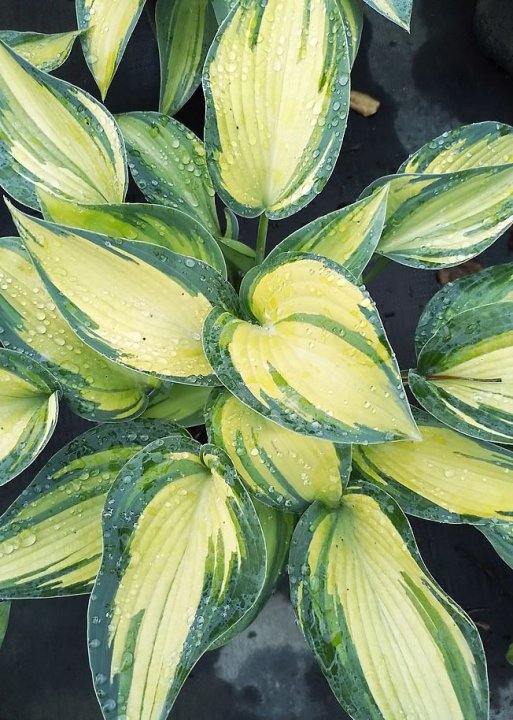
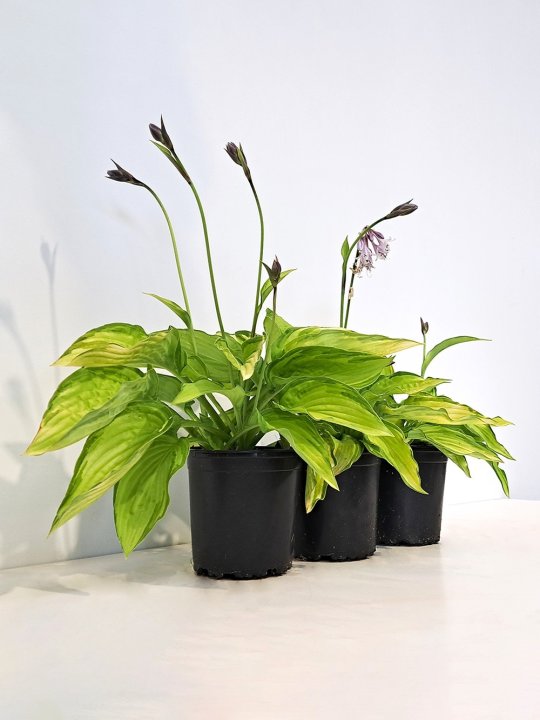
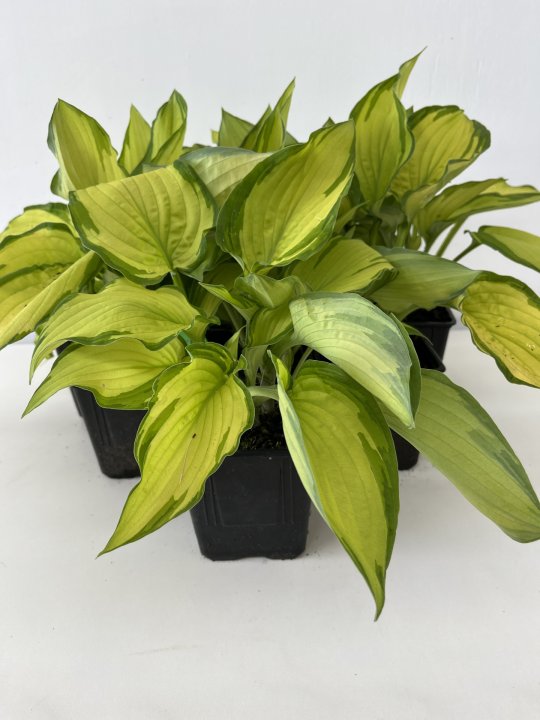
Hosta June is a captivating deciduous perennial celebrated for its striking foliage and versatility in the garden. This Hosta hybrid features heart-shaped leaves with a unique variegation of blue-green margins and gold centres that shift to chartreuse in deeper shade. During the summer, Hosta June produces pale lavender flowers on tall scapes, adding a delicate touch of colour to the garden. As a deciduous plant, it enters a dormant stage during the cooler months, with its foliage dying back until the following spring.
Ideal for shaded garden beds, borders, and containers, Hosta June thrives in gardens designed with a woodland or cottage style. It can also be used as ground cover or an edging plant, adding texture and visual interest to garden landscapes. This Hosta prefers partial to full shade and grows best in moist, well-draining, fertile soil.
For optimal growth, ensure regular watering to keep the soil consistently moist but not waterlogged. Mulching helps conserve soil moisture and provides organic material that enriches the soil. Hosta June requires minimal maintenance; simply remove spent flowers and damaged leaves to keep the plant looking its best.
Hosta June matures to a height of about 45-60 cm and a spread of 60-75 cm, forming a dense, rounded clump. Its attractive variegated foliage and elegant flowers create a lush, sophisticated display, making it a standout addition to any shaded garden space.
Trimming: Remove old, faded or damaged leaves in late winter to early spring before the new foliage emerges, and cut away any scorched or collapsed leaves during the season to keep the clump tidy. Hosta ‘June’ is mainly grown for its foliage, so trimming is mostly about cleaning up old growth rather than shaping.
Deadheading: Deadheading is worthwhile once the flowering stems have finished. Cut spent flower spikes back to the base to tidy the plant and direct energy back into the foliage.
Fertilising: Feed in spring as the leaves emerge with a balanced or slow-release fertiliser, then avoid feeding late in the season when soft new growth is more vulnerable. Rich soil often means only modest feeding is needed.
Watering: Keep the soil evenly moist while the plant is establishing, and water during dry spells so the soil stays slightly damp rather than drying right out. Hosta ‘June’ performs best in moist, well-drained, humus-rich soil, and drought stress often shows as browning leaf edges.
Pest control: Slugs and snails are the main pests to watch for, especially on fresh growth, although ‘June’ can be somewhat more resistant than thinner-leaved hostas. Look for holes in leaves, ragged edges and slime trails. Protect vulnerable shoots early with targeted slug and snail control, and encourage natural predators where possible.
Disease management: Watch for crown and root rots, as well as leaf diseases such as anthracnose. Signs include yellowing or browning leaves, mushy decay at the base of the leaf stalks, leaf collapse, or pale tan spots with darker borders that can turn leaves tattered. Remove affected foliage, improve drainage and airflow, and avoid keeping the crown overly wet.
Enjoy complimentary delivery anywhere in mainland New Zealand when you purchase plants worth $250 or more*.
For orders below $250, the following flat-rate delivery charges are applicable:
- Urban delivery within mainland New Zealand: $19.95
- Rural delivery within mainland New Zealand: $39.95
- Waiheke, Chatham and Great Barrier Islands: Please contact us for shipping options.
We aim to have all orders shipped within 14 days from the order date, unless a different shipping date is specified alongside a product.