Hebe salicifolia
 Notify Me
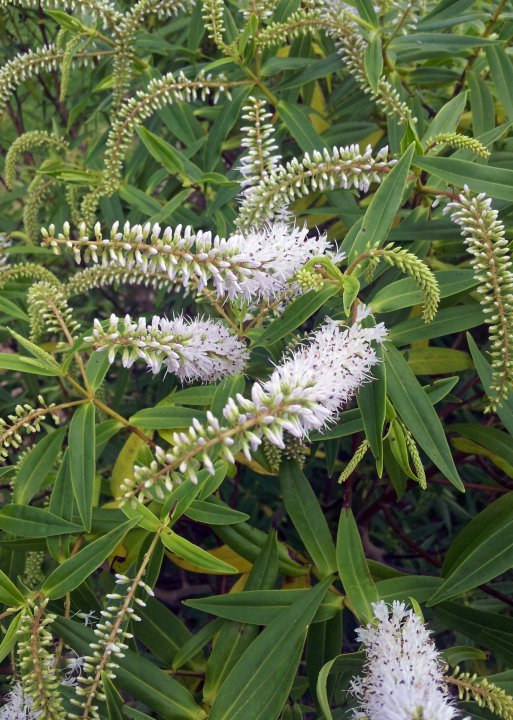
Hebe salicifolia, commonly known as Veronica salicifolia or Koromiko, is a large, evergreen shrub native to New Zealand. It is characterized by its long, narrow, willow-like leaves and produces clusters of white or pale pink flowers in the summer and autumn. This robust hebe variety is known for its sturdy growth and ability to withstand harsh conditions, including coastal winds and poor soils.
In the garden, Hebe salicifolia is excellent for creating informal hedges, screens, or as a specimen plant in mixed borders. Its attractive foliage and floriferous nature make it a popular choice for adding structure and interest to the landscape. It suits a variety of garden styles, including coastal, informal, and native plant gardens, providing a reliable and attractive evergreen presence.
Willow-leaf hebe prefers full sun to partial shade and thrives in well-drained soil. It is relatively drought-tolerant once established and can tolerate coastal conditions, making it a versatile plant for various garden environments. For hedging or mass planting, a spacing of about 1m apart is recommended to allow for growth and air circulation while maintaining a dense appearance.
The mature size of Hebe salicifolia can range from 1.5-2.5m in height and width, making it one of the larger hebe species.
Trimming: Lightly trim after flowering to maintain a compact, tidy shape and encourage bushy growth. Remove any dead, weak or frost-damaged stems as needed. If grown as a hedge, clip lightly to keep its form, but avoid cutting back into old woody stems too hard.
Deadheading: Deadheading is not usually necessary, but you can remove spent flower heads to keep the plant looking neat and to prolong its display.
Fertilising: Apply compost or a balanced slow-release fertiliser in spring to support healthy growth. Avoid excessive feeding, as too much fertiliser can lead to soft, sappy growth.
Watering: Water regularly during the establishment phase until the plant is well rooted. Once established, Hebe salicifolia is fairly tolerant of dry conditions, but it should still be watered during extended dry periods.
Pest control: Check for aphids, scale insects and spider mites, particularly on soft new growth. Treat infestations with insecticidal soap or horticultural oil if required.
Disease management: Watch for fungal problems such as leaf spot and root rot, especially in poorly drained sites. Signs include yellowing leaves, black spots, wilting or dieback. Remove affected growth, improve air circulation, and make sure the soil drains freely to help prevent disease.
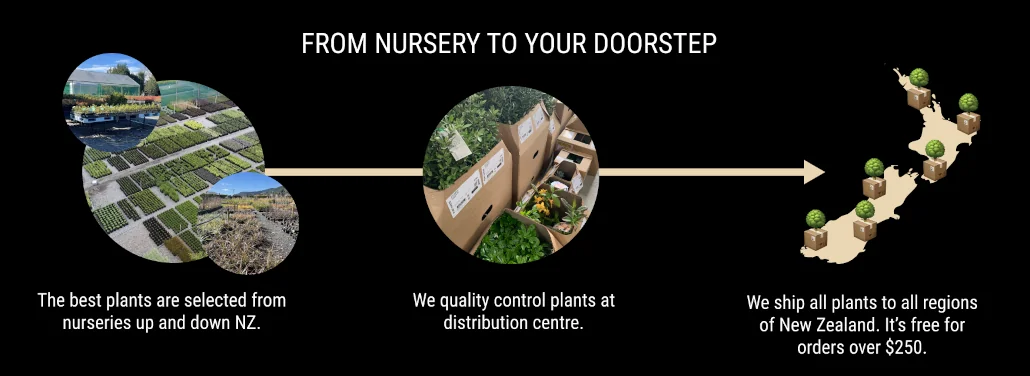
Enjoy complimentary delivery anywhere in mainland New Zealand when you purchase plants worth $250 or more*.
For orders below $250, the following flat-rate delivery charges are applicable:
- Urban delivery within mainland New Zealand: $19.95
- Rural delivery within mainland New Zealand: $39.95
- Waiheke, Chatham and Great Barrier Islands: Please contact us for shipping options.
We aim to have all orders shipped within 14 days from the order date, unless a different shipping date is specified alongside a product.