Betula utilis var. jacquemontii - Field-Grown
 Notify Me
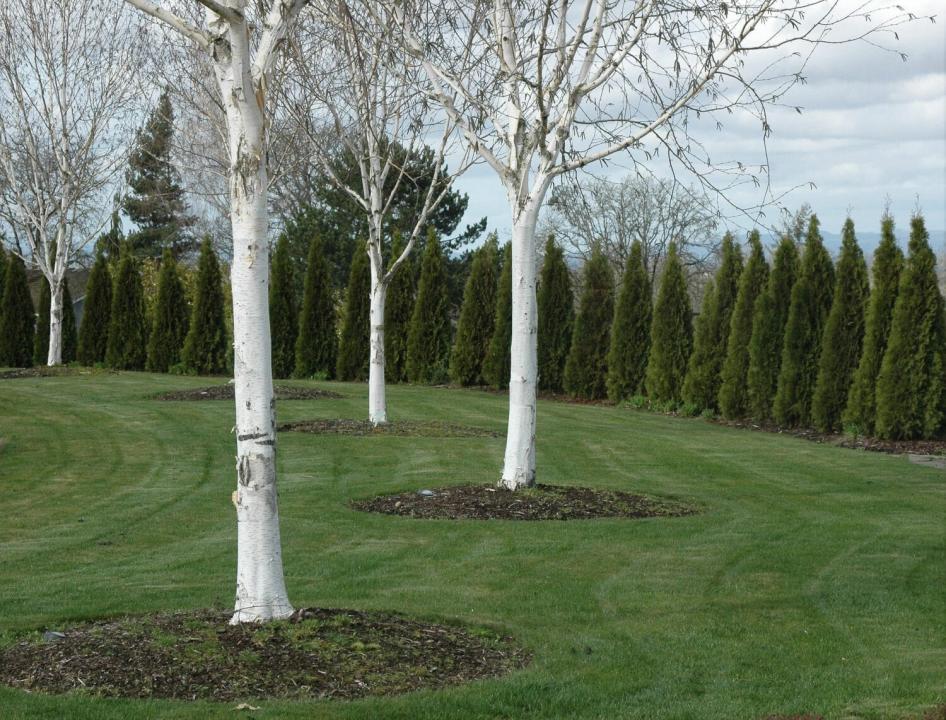
Betula utilis var. jacquemontii is a highly sought-after Himalayan birch known for its brilliant white bark, which develops early and offers striking contrast year-round. Its upright, open habit supports dark green, ovate leaves that turn clear yellow in Autumn, providing seasonal interest and textural lightness.
Perfect for contemporary, woodland, and architectural gardens, it shines as a specimen tree and is especially effective in group plantings where its luminous bark can create strong winter structure.
Thrives in full sun to partial shade and prefers moist, well-draining soil. Performs best in cooler climates and benefits from consistent moisture, particularly when establishing. Space 4–6 metres apart for mature canopy development.
Mature size typically reaches 10–15 metres tall with a narrow to rounded crown spreading 4–6 metres wide.
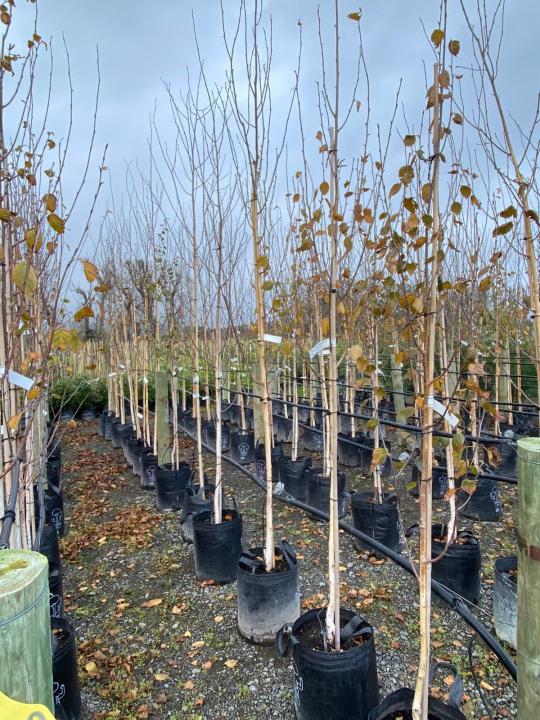
Field-grown plants are grown directly in open fields, enabling their roots to spread and develop naturally, resulting in larger size, established root systems, and increased resilience. When transporting these plants, hessian, a coarse fabric made from natural fibres like jute, is commonly used to wrap their roots, providing protection during transportation and handling.
Trimming: Prune in late winter to early spring to remove any dead, damaged, or crossing branches. Light formative pruning when young helps develop a strong framework. Avoid major pruning in summer as this can lead to excessive sap bleeding.
Deadheading: Not applicable.
Fertilising: Apply a balanced, slow-release fertiliser in early spring while the tree is establishing. Mature trees growing in fertile soil generally do not need regular feeding.
Watering: Water regularly during the first 1–2 years after planting, especially during dry periods. Once established, it is moderately drought-tolerant but benefits from deep watering during prolonged dryness to maintain vigour.
Pest Control: Keep an eye out for aphids and leaf miners. Aphids can be treated with insecticidal soap or neem oil if populations become heavy. Leaf miner damage is usually minor and cosmetic.
Disease Management: Susceptible to leaf spot, powdery mildew, and occasional cankers in humid or poorly ventilated conditions. Promote good air circulation and remove fallen leaves to minimise fungal issues. Ensure the tree remains healthy to avoid stress-related problems such as dieback or borer damage—seek expert advice if symptoms appear.
Enjoy complimentary delivery anywhere in mainland New Zealand when you purchase plants worth $250 or more*.
For orders below $250, the following flat-rate delivery charges are applicable:
- Urban delivery within mainland New Zealand: $19.95
- Rural delivery within mainland New Zealand: $39.95
- Waiheke, Chatham and Great Barrier Islands: Please contact us for shipping options.
We aim to have all orders shipped within 14 days from the order date, unless a different shipping date is specified alongside a product.