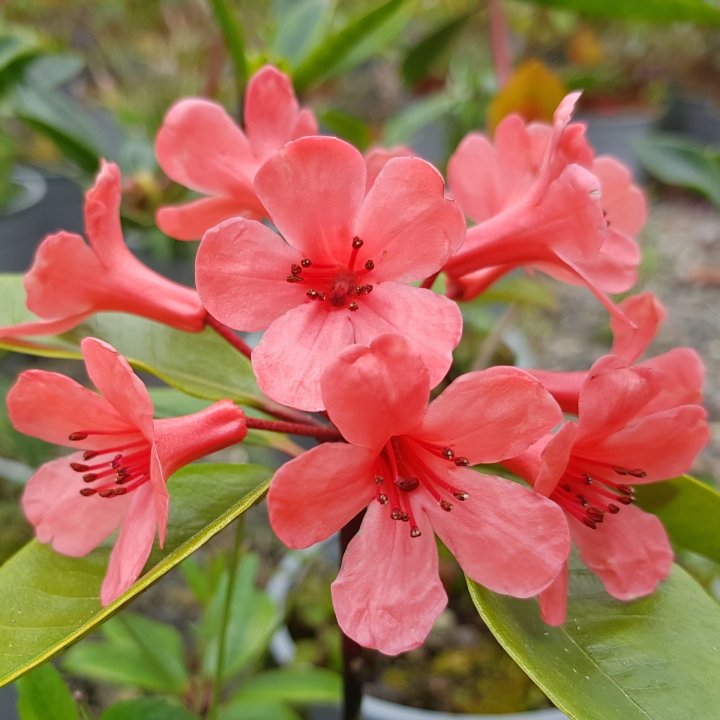
Vireya Rob's Favourite
Vireya Rob's Favourite is a compact evergreen vireya rhododendron grown for its lush, tropical-looking foliage and clusters of tubular flowers that appear in flushes throughout the year. Unlike deciduous azaleas, this vireya holds its leaves year-round and can bloom across multiple seasons, making it a reliable performer in sheltered NZ gardens. Mature plants typically reach around 1 to 1.5m high and wide.
This vireya suits a tropical-style planting, a sheltered courtyard garden, or a modern minimalist border where year-round foliage is valued. It performs well in containers on a deck or patio, where it can be moved under cover in cold snaps. Try massing several plants together for a fuller effect, or pair with ferns and broadleaf shrubs for a layered, textured look.
Grow this vireya in a position with bright, indirect light or dappled shade. It needs free-draining, open, acidic mix with good aeration around the roots. Raised beds or containers with bark-based potting mix work well. Avoid heavy or waterlogged soil, which quickly causes root problems.
Water regularly during dry periods and feed with an azalea and rhododendron fertiliser in spring and early summer. Vireya Rob's Favourite is toxic to cats, dogs, and horses if eaten. This vireya is frost-tender and is not suited to frost-prone inland areas such as Central Otago or inland Southland.
Trimming: Trim lightly after each flowering flush to keep the plant compact and encourage new growth. Vireyas respond well to light shaping but avoid cutting into old, bare wood. Remove any dead or weak stems as they appear.
Deadheading: Deadheading is not essential. Removing spent flower clusters can encourage the next flush of growth and keep the plant tidy, but leaving them does no harm.
Fertilising: Feed with an azalea and rhododendron fertiliser in spring and again after flowering in early summer. Use a slow-release or liquid formula at the recommended rate. Avoid high-phosphorus general fertilisers.
Watering: Water regularly to keep the growing mix evenly moist but never waterlogged. Vireyas in containers dry out faster than those in the ground, so check them often in summer. Reduce watering in winter but do not let the roots dry out completely.
Pest Control: Watch for aphids, thrips, two-spotted mite, and scale, particularly on new growth and leaf undersides. Treat early with a suitable insecticide or horticultural oil to prevent populations building up.
Disease Management: Free-draining soil and good airflow around the plant prevent most issues. Wet or compacted growing conditions invite Phytophthora root rot, which is the main risk for vireyas. Petal blight can affect flowers in warm, humid conditions; remove and bin affected blooms and clear fallen material from around the plant.
Enjoy complimentary delivery anywhere in mainland New Zealand when you purchase plants worth $250 or more*.
For orders below $250, the following flat-rate delivery charges are applicable:
- Urban delivery within mainland New Zealand: $19.95
- Rural delivery within mainland New Zealand: $39.95
- Waiheke, Chatham and Great Barrier Islands: Please contact us for shipping options.
We aim to have all orders shipped within 14 days from the order date, unless a different shipping date is specified alongside a product.