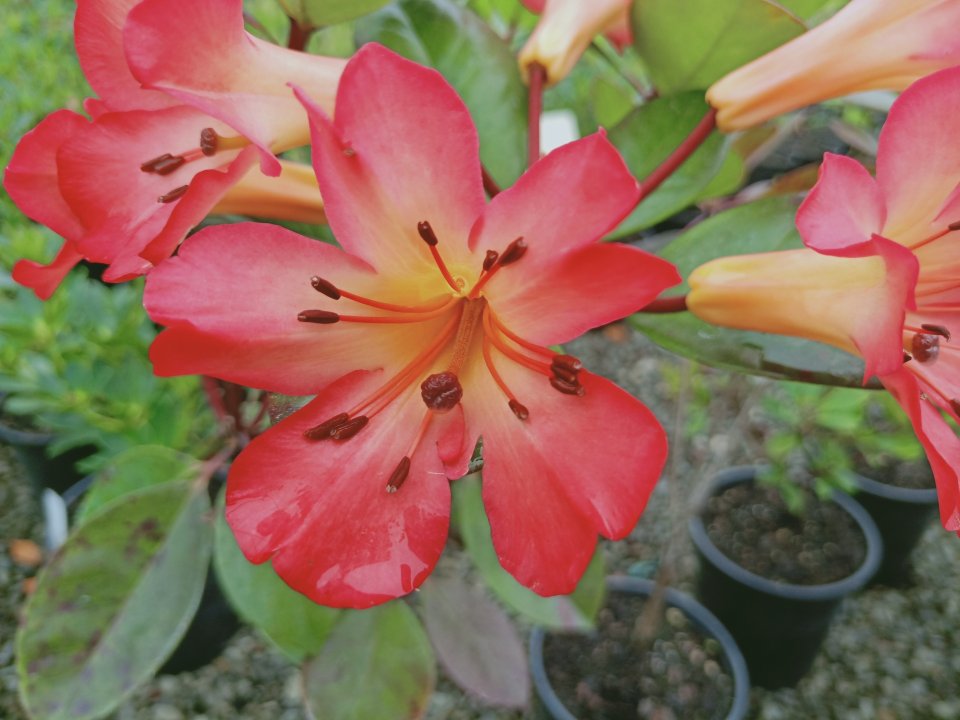
Vireya Flash Harry
Vireya Flash Harry is a tropical rhododendron grown for its vivid cherry pink flowers with a creamy yellow throat. The blooms appear in loose clusters and the plant can flower more than once a year, often peaking in autumn and spring. It grows to around 1 to 1.5m high, making it a manageable shrub for sheltered spots.
This vireya suits a subtropical garden, a lush courtyard planting, or a sheltered coastal border. It works well massed with other vireyas in warm tones, or paired with foliage plants to contrast the bright blooms. It also performs reliably in containers on a sheltered deck or patio.
Grow Flash Harry in dappled shade or morning sun with afternoon shade. It needs free-draining, open, acidic mix with good organic content. A blend of bark, pumice, and compost suits it well. Avoid heavy clay or ground that holds water after rain.
This vireya is frost-tender and is not suited to frost-prone inland areas such as Central Otago or inland Southland. Water regularly through dry spells and feed in spring and autumn with a fertiliser formulated for rhododendrons. Like all vireyas and rhododendrons, Flash Harry is toxic to cats, dogs, and horses if eaten.
Trimming: Trim lightly after each flowering flush to keep the plant compact and encourage new growth. Vireyas respond well to a light tidy but do not cut back into old bare wood. Remove any dead or weak stems as you go.
Deadheading: Deadheading is not essential. Removing spent flower clusters keeps the plant tidy and can promote the next flush, but leaving them does no harm.
Fertilising: Feed in spring and autumn with a fertiliser formulated for azaleas, camellias, and rhododendrons. Avoid high-phosphorus or general-purpose fertilisers. A controlled-release product applied at the start of each season works well.
Watering: Keep the mix evenly moist but never waterlogged. Vireyas in containers dry out faster than in-ground plants, so check regularly through summer. Reduce watering in cooler months.
Pest Control: Watch for aphids, thrips, two-spotted mite, and scale insects. Check leaf undersides regularly and treat early with horticultural oil or a suitable spray.
Disease Management: Free-draining soil and good airflow prevent most problems. Wet or compacted roots invite Phytophthora root rot, which is the main risk for vireyas. Clear spent flowers and fallen leaves to reduce fungal pressure. Petal blight can occur in warm, humid conditions; remove and bin affected flowers promptly.
Enjoy complimentary delivery anywhere in mainland New Zealand when you purchase plants worth $250 or more*.
For orders below $250, the following flat-rate delivery charges are applicable:
- Urban delivery within mainland New Zealand: $19.95
- Rural delivery within mainland New Zealand: $39.95
- Waiheke, Chatham and Great Barrier Islands: Please contact us for shipping options.
We aim to have all orders shipped within 14 days from the order date, unless a different shipping date is specified alongside a product.