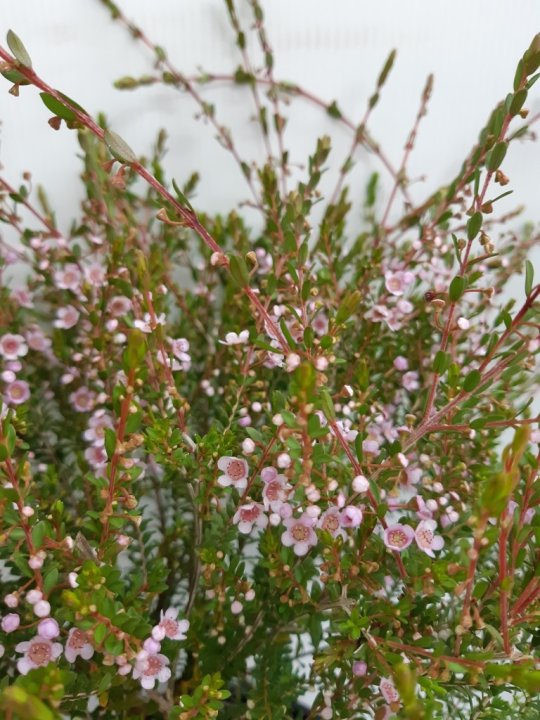
Thryptomene saxicola Rosea
 Notify Me
Thryptomene saxicola Rosea is a fine-textured Australian shrub grown for its generous display of pale pink flowers. The blooms are small and star-shaped, carried along wiry stems from late autumn through winter and into spring, providing colour when little else is flowering. It grows to around 0.6 to 1m high and wide, forming a soft, arching mound.
This thryptomene suits a cottage garden, a coastal garden, or a relaxed informal border. It works well massed together for a hazy drift of pale pink, or planted alongside other small-flowered shrubs and ornamental grasses. The long flowering season makes it a reliable choice for mixed plantings that need winter interest.
Grow Thryptomene saxicola Rosea in full sun to light shade. It requires free-draining soil and tolerates dry conditions once established. Sandy or gravelly soils suit it well. Good airflow around the plant helps keep it healthy. Avoid heavy, wet ground, which it does not tolerate.
Trim lightly after the main flush of flowering to keep the shape tidy. Pet toxicity for thryptomene is not well documented. As a precaution, discourage cats and dogs from chewing the plant, and seek veterinary advice if ingestion occurs.
Trimming: Trim lightly after the main flowering period in spring to maintain a tidy, compact shape. Remove straggly or crossing stems at the same time. Avoid hard pruning into old wood, as thryptomene is slow to recover from heavy cutting.
Deadheading: Deadheading is not essential. The spent flowers are small and unobtrusive, and leaving them does no harm. You can run your hands along the stems after flowering to remove old blooms if you prefer a neater appearance.
Fertilising: Feed lightly in spring with a low-phosphorus native or native-specific slow-release fertiliser. Thryptomene does not need heavy feeding and performs well in lean soils. Over-fertilising can promote soft growth at the expense of flowers.
Watering: Water regularly through the first summer to help the plant establish. Once settled, thryptomene is reasonably drought-tolerant and needs watering only during extended dry spells. Avoid overwatering or allowing water to pool around the roots.
Pest Control: Thryptomene is generally trouble-free. Watch for aphids and scale on new growth and treat early with horticultural oil or a suitable spray if numbers build up.
Disease Management: Free-draining soil and good airflow are the main defences. Wet or heavy ground can lead to Phytophthora root rot, which is the most common cause of decline. Clear fallen debris from around the base to reduce fungal risk.
Enjoy complimentary delivery anywhere in mainland New Zealand when you purchase plants worth $250 or more*.
For orders below $250, the following flat-rate delivery charges are applicable:
- Urban delivery within mainland New Zealand: $19.95
- Rural delivery within mainland New Zealand: $39.95
- Waiheke, Chatham and Great Barrier Islands: Please contact us for shipping options.
We aim to have all orders shipped within 14 days from the order date, unless a different shipping date is specified alongside a product.