Santolina Lime Fizz
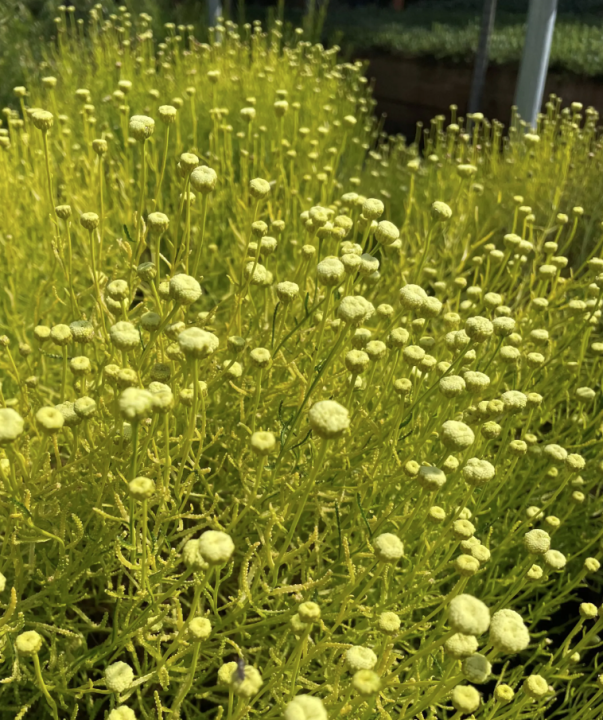
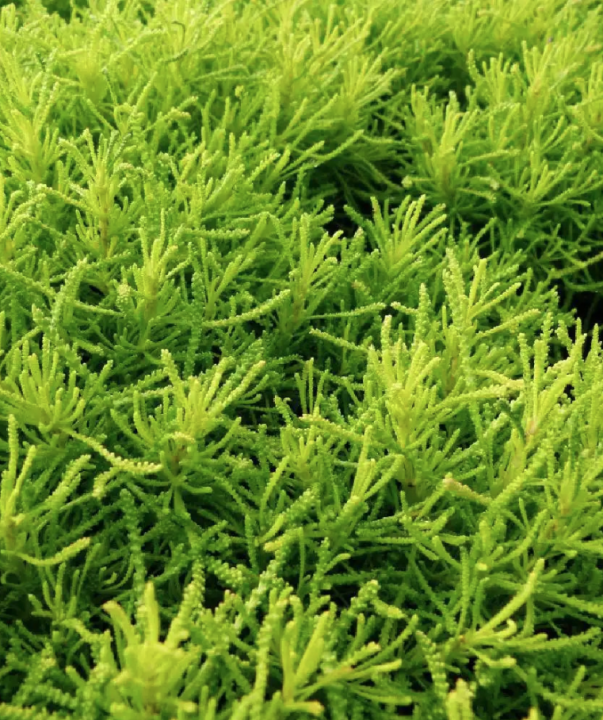
Bright lime/yellow-green foliage sets Santolina 'Lime Fizz' apart from the grey-leaved cotton lavenders. The leaves are finely divided and densely packed, forming a tight rounded mound that holds its shape without much help, and they give off a sharp aromatic scent when brushed or clipped. Small button flowers in lemon-yellow open in December and January on short stems above the foliage.
The reason to grow this santolina is form rather than flower. It clips into a low ball or a short run of edging, which makes it useful in a formal bed, a knot garden, or a herb garden where structure matters more than colour. It also holds a gravel garden together, and the foliage tone lifts a planting of grey and silver plants.
Full sun and free-draining soil, and the poorer that soil is the better. Cotton lavender comes from the Mediterranean, so it takes heat, drought and coastal wind once established, and it fails in wet rich ground. Suited to New Zealand gardens with sharp drainage. Space 0.4 m apart for a continuous edge. Never cut back into bare old wood, because it does not reshoot from it.
A rounded evergreen mound around 0.4 to 0.5 m tall and wide, dense enough to read as a solid shape.
Trimming: Clip lightly in early spring to shape the mound, then again straight after flowering in late January. Keep every cut in soft green growth, because santolina will not regrow from bare woody stems and a hard renovation cut usually kills the plant. Replace plants every five or six years once they open out at the centre.
Deadheading: Shearing the spent flower stems off after flowering doubles as the summer trim, so the two jobs are done together. Some gardeners remove flower buds entirely to keep a clipped shape crisp, which is a reasonable approach in a formal bed.
Fertilising: Do not feed. Santolina grows tighter and lives longer in poor soil, and fertiliser produces soft open growth that flops and rots. Skip the mulch as well, or keep it well clear of the stems.
Watering: Water only through the first summer while roots establish. After that, established plants are genuinely drought-tolerant and are far more likely to be killed by too much water than too little. Container plants should dry out between waterings.
Pest Control: Aphids occasionally appear on soft spring growth and wash off with water. The aromatic foliage deters most pests, and no routine spraying is needed in New Zealand conditions.
Disease Management: Root and stem rot in wet soil is the main cause of loss. Plant on a slope, a raised bed, or gravel, and keep the crown clear of mulch and overhanging plants. Powdery mildew is rare and usually signals poor airflow at the centre of an old plant.
Enjoy complimentary delivery anywhere in mainland New Zealand when you purchase plants worth $250 or more*.
For orders below $250, the following flat-rate delivery charges are applicable:
- Urban delivery within mainland New Zealand: $19.95
- Rural delivery within mainland New Zealand: $39.95
- Waiheke, Chatham and Great Barrier Islands: Please contact us for shipping options.
We aim to have all orders shipped within 14 days from the order date, unless a different shipping date is specified alongside a product.