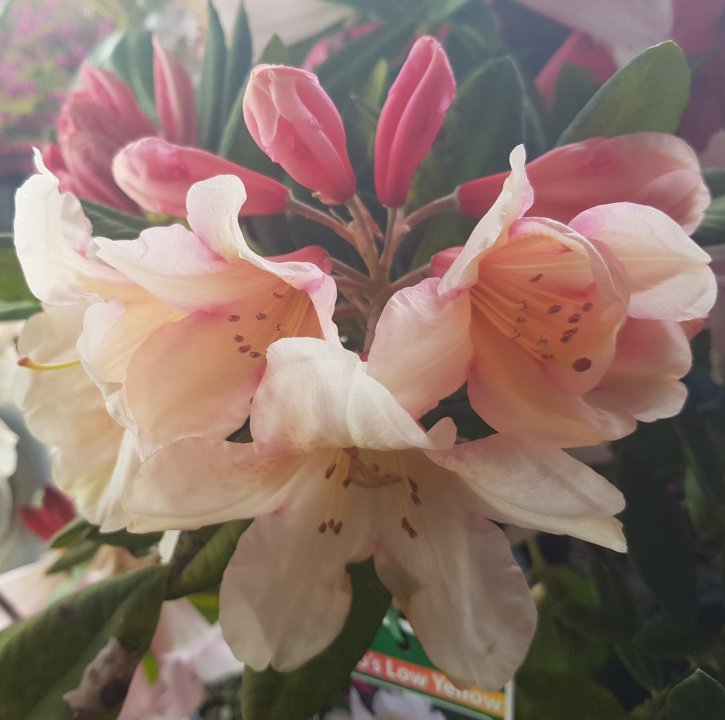
Rhododendron Ostbo's Low Yellow
Rhododendron Ostbo's Low Yellow puts on a quietly changing show, opening apricot-pink buds to soft flowers in cream, pale yellow, and apricot, each with an apricot-orange centre. Because the buds and open flowers sit together, the trusses carry several tones at once. The plant is compact and mounded, often a little wider than it is tall, with rounded, dark green foliage.
This rhododendron suits the front or middle of a shaded border, a rockery, or a large container on a shaded patio or courtyard. The soft, warm colouring blends easily with other plants, and Ostbo's Low Yellow fits cottage gardens, woodland schemes, and shade plantings. The compact, spreading habit works well in townhouse and courtyard gardens.
Plant in dappled shade or morning sun in free-draining, acidic soil enriched with compost or leaf mould. This is an extremely hardy rhododendron that copes across most NZ gardens, including cooler districts, given shelter from harsh afternoon sun. Keep the shallow roots cool with annual mulching. Rhododendron foliage is toxic to cats and dogs if eaten in quantity.
Ostbo's Low Yellow reaches around 1 to 1.2 m tall and a little wider at maturity, flowering in mid to late spring.
Trimming: Rhododendrons need very little pruning. After flowering in spring, remove any dead, damaged, or crossing stems and lightly shape to keep the form neat. Avoid cutting hard into old, bare wood, as rhododendrons can be slow to reshoot from it.
Deadheading: Deadheading is not essential. If you have time, snap off the spent flower trusses by hand once flowering finishes, which tidies the plant and channels energy into next season's growth rather than seed. Take care not to damage the new buds forming just below.
Fertilising: Feed in early spring with a fertiliser made for acid-loving plants, such as rhododendron, azalea, and camellia food. A second light feed after flowering supports new growth. Avoid lime and high-nitrogen lawn fertilisers, which the shallow roots dislike.
Watering: Keep the soil evenly moist, especially through the first two summers and in dry spells. The shallow, fibrous roots dry out quickly, so water deeply and mulch with bark or leaf mould to hold moisture. Rainwater is better than hard tap water where possible.
Pest Control: Thrips are the main concern in NZ, silvering the upper leaf surface in warm, dry weather, while two-spotted mite and scale insects can also appear. Treat with horticultural oil, keep plants well watered, and improve airflow around the foliage.
Disease Management: Most problems trace back to soil and drainage. Phytophthora root rot causes wilting and dieback in wet, heavy ground, so plant in free-draining soil or a raised position. Petal blight can mark the flowers in warm, humid spring weather; remove affected flowers promptly.
Enjoy complimentary delivery anywhere in mainland New Zealand when you purchase plants worth $250 or more*.
For orders below $250, the following flat-rate delivery charges are applicable:
- Urban delivery within mainland New Zealand: $19.95
- Rural delivery within mainland New Zealand: $39.95
- Waiheke, Chatham and Great Barrier Islands: Please contact us for shipping options.
We aim to have all orders shipped within 14 days from the order date, unless a different shipping date is specified alongside a product.