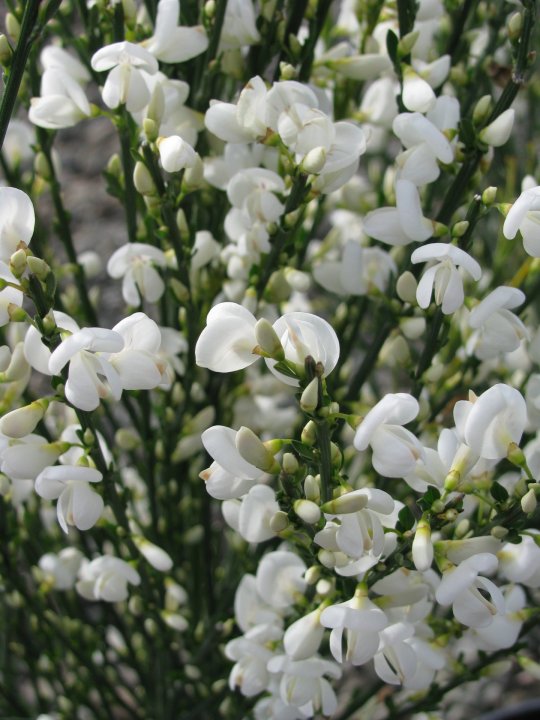
Cytisus albus
Cytisus albus, the white Spanish broom, is a deciduous shrub grown for its mass of white pea-like flowers. The blooms appear in late spring, covering the arching stems in a clean, even display. It grows to around 1 to 1.5m high and wide, forming a rounded, free-seeding shrub with slender green stems that stay attractive through winter.
This broom suits a cottage garden, a coastal garden, or a relaxed informal border. It works well massed on a dry bank or along a fence line where its arching habit can spread freely. Pair it with lavender, salvias, or other drought-tolerant shrubs for a low-maintenance, sun-loving planting.
Grow Cytisus albus in full sun in free-draining, low-fertility soil. It thrives in sandy or stony ground and dislikes rich, wet conditions. Once established, it is drought-tolerant and needs little supplementary watering. Avoid heavy clay soils, which can cause root problems.
Trim lightly after flowering to keep the plant tidy and prevent excessive self-seeding. Do not cut into old wood, as brooms do not reshoot well from it. Cytisus species are toxic to dogs, cats, and horses if eaten, so take care in pet households.
Trimming: Trim lightly straight after flowering in late spring to early summer. Remove the spent flowering stems back by about one third to keep the plant compact and tidy. Do not cut into old bare wood, as brooms do not reshoot reliably from it.
Deadheading: Deadheading is not essential. If you want to limit self-seeding, remove spent flower stems before the pods ripen and scatter seed. Otherwise, leaving them does no harm.
Fertilising: Brooms prefer low-fertility soil and rarely need feeding. If growth looks poor, apply a light general fertiliser in early spring. Avoid rich or high-nitrogen feeds, which produce soft, floppy growth.
Watering: Water regularly through the first summer to help the plant establish. Once settled in, Cytisus albus is drought-tolerant and needs watering only in prolonged dry spells.
Pest Control: Cytisus albus is generally trouble-free. Watch for aphids on new growth in spring and treat early with a suitable insecticide or a blast of water. Scale can appear on older stems and is best treated with horticultural oil.
Disease Management: Good drainage and open airflow prevent most problems. Wet or heavy soil invites Phytophthora root rot, which is the main risk for brooms in NZ gardens. Plant in free-draining ground and avoid overwatering.
Enjoy complimentary delivery anywhere in mainland New Zealand when you purchase plants worth $250 or more*.
For orders below $250, the following flat-rate delivery charges are applicable:
- Urban delivery within mainland New Zealand: $19.95
- Rural delivery within mainland New Zealand: $39.95
- Waiheke, Chatham and Great Barrier Islands: Please contact us for shipping options.
We aim to have all orders shipped within 14 days from the order date, unless a different shipping date is specified alongside a product.