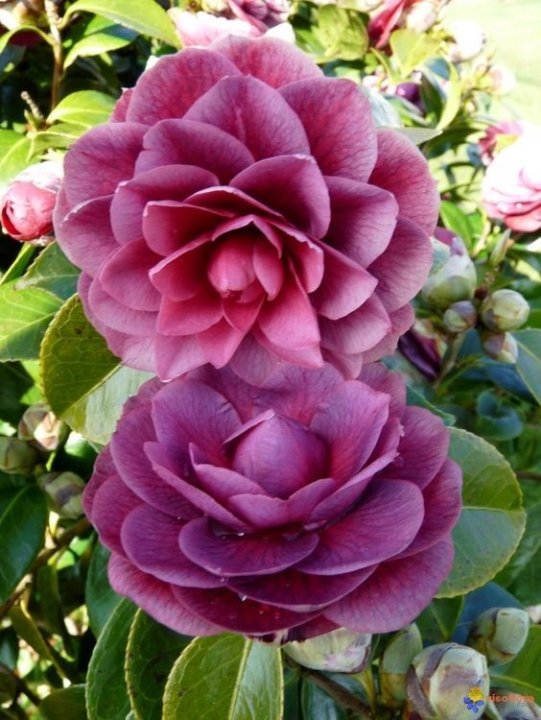
Camellia Sir Victor Davies
Camellia Sir Victor Davies is a distinctive evergreen camellia bearing deep cardinal red buds that open to smoky lavender-purple blooms. The colour shift is unusual among camellias and gives the plant a moody, layered character. It grows to around 2 to 3m high and wide over time, making it a substantial garden shrub with glossy, dark green foliage that holds year-round. Flowers appear from late autumn through winter.
This camellia suits a woodland garden, a formal border, or a classic cottage garden. Its unusual flower colour pairs well with soft pinks, creams, or deep reds. Plant camellias in groups for a bold seasonal display along a fence line or pathway, or use a single specimen as a focal point in a sheltered bed.
Grow Sir Victor Davies in part shade or filtered light. It prefers free-draining, acidic soil enriched with organic matter. Work compost through the planting site and mulch the root zone to retain moisture and suppress weeds. Avoid heavy, waterlogged ground and exposed positions with harsh afternoon sun.
Trim lightly after flowering and feed with an azalea and camellia fertiliser in spring. Camellias are not considered toxic to cats, dogs, or horses, though it is sensible to discourage pets from chewing any garden plant.
Trimming: Trim lightly once flowering finishes in late winter to early spring. Remove any dead, weak, or crossing stems to keep an open, tidy shape. Camellias respond well to light shaping at this time but do not require hard pruning.
Deadheading: Deadheading is not essential. Removing spent blooms by hand can reduce the risk of petal blight spreading, but leaving them does no harm if the plant is otherwise healthy.
Fertilising: Feed with a fertiliser formulated for azaleas and camellias in spring as new growth begins. A second light feed in early summer supports bud development for the following season. Avoid high-phosphorus general fertilisers.
Watering: Water regularly through the first summer to help the plant establish. Once settled, water deeply during dry spells, particularly in summer when buds are forming. Mulch the root zone to hold moisture and keep roots cool.
Pest Control: Check foliage for aphids, scale insects, and mealybugs, especially on new growth. Treat early with horticultural oil or a suitable spray. Thrips can mark petals in warm, dry conditions; monitor during flowering.
Disease Management: Camellia petal blight, caused by Ciborinia camelliae, is the main disease concern. It turns blooms brown rapidly in wet conditions. Remove and bin affected flowers promptly and clear fallen petals from the ground. Do not compost them. Phytophthora root rot is a risk in wet or poorly drained soil, so free-draining conditions are essential. Good airflow around the plant reduces fungal pressure.
Enjoy complimentary delivery anywhere in mainland New Zealand when you purchase plants worth $250 or more*.
For orders below $250, the following flat-rate delivery charges are applicable:
- Urban delivery within mainland New Zealand: $19.95
- Rural delivery within mainland New Zealand: $39.95
- Waiheke, Chatham and Great Barrier Islands: Please contact us for shipping options.
We aim to have all orders shipped within 14 days from the order date, unless a different shipping date is specified alongside a product.