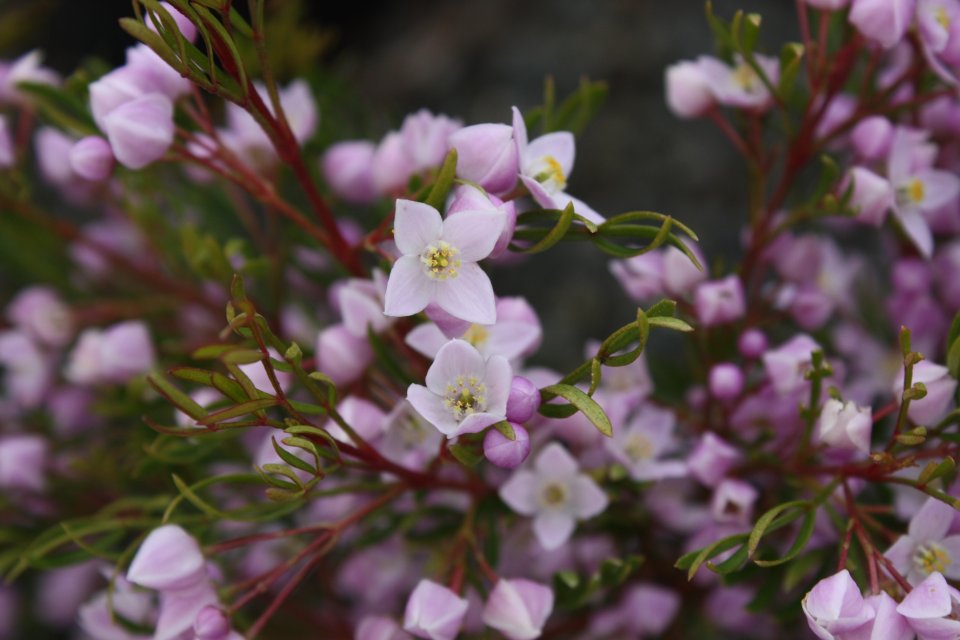
Boronia pinnata
Boronia pinnata is a slender, upright shrub grown for its rose pink, star-shaped flowers. The blooms are dainty and lightly scented, appearing in profusion from late winter through spring (July to November). Fine, pinnate foliage gives the plant a feathery texture that adds interest between flowering periods. Plants typically reach 1 to 1.5m high and around 0.5 to 1m wide.
This boronia suits a cottage garden, a native-style planting, or an informal mixed shrub border. Use it in small groups for a gentle wash of colour, or plant it as a specimen where its fragrance can be appreciated up close. It pairs well with grevilleas, hebes, and other fine-textured Australian and New Zealand natives.
Grow Boronia pinnata in a sheltered spot with morning sun and afternoon shade, or filtered light through the day. It needs free-draining, slightly acidic soil with good organic content. Sandy or loamy soils work well. Avoid wet, heavy ground, which quickly leads to root problems.
Trim lightly after flowering to keep the plant compact. Avoid overwatering once established. Boronia pinnata is not suited to frost-prone inland areas such as Central Otago or inland Southland. The toxicity of boronia to cats and dogs is not well established, so keep pets from chewing the plant as a precaution.
Trimming: Trim lightly straight after flowering in late spring to keep the plant compact and encourage fresh growth. Remove any dead or straggly stems. Avoid cutting into old bare wood, as boronia is slow to reshoot from hard pruning.
Deadheading: Deadheading is not essential. You can remove spent flowers by hand to tidy the plant, but leaving them does no harm.
Fertilising: Feed in early spring with a slow-release fertiliser suited to natives or acid-loving plants. Keep feeding light, as boronia dislikes rich conditions. One application per year is usually enough.
Watering: Water regularly through the first season to help the plant establish. Once settled, water during dry spells but avoid keeping the root zone constantly wet. Good drainage is more important than frequent watering.
Pest Control: Watch for aphids, thrips, and scale on new growth and leaf undersides. Treat early with a suitable horticultural oil or insecticidal spray before numbers build up.
Disease Management: Free-draining soil and good airflow prevent most problems. Wet or compacted ground invites Phytophthora root rot, which is the main risk for boronia. Clear fallen leaves and spent flowers from around the base to reduce fungal pressure.
Enjoy complimentary delivery anywhere in mainland New Zealand when you purchase plants worth $250 or more*.
For orders below $250, the following flat-rate delivery charges are applicable:
- Urban delivery within mainland New Zealand: $19.95
- Rural delivery within mainland New Zealand: $39.95
- Waiheke, Chatham and Great Barrier Islands: Please contact us for shipping options.
We aim to have all orders shipped within 14 days from the order date, unless a different shipping date is specified alongside a product.