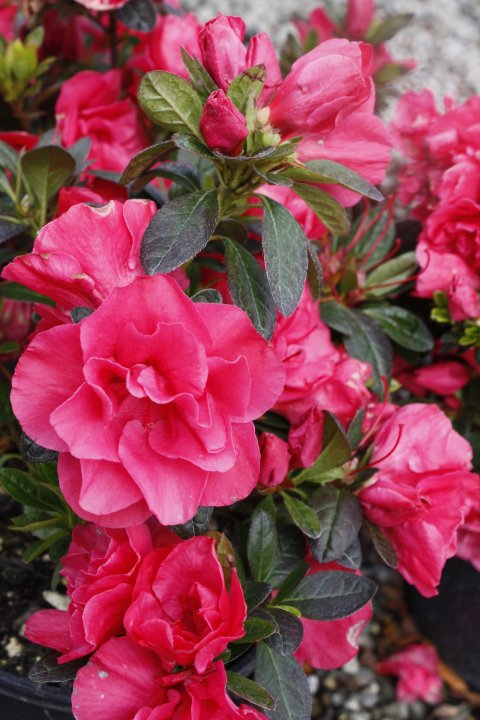
Azalea Madame Alfred Sanders
Azalea Madame Alfred Sanders is a compact evergreen azalea grown for its reliable spring display and tidy, rounded habit. The blooms open in a dense flush from September, covering the plant in layered flowers that hold their form well. This is a classic azalea with consistent performance and a neat shape that suits smaller garden spaces. Mature size reaches around 1 to 1.2m high and wide.
This azalea suits a cottage garden, a Japanese-style planting, or a shaded mixed border. Use it in groups for a massed seasonal display, or plant single specimens to anchor a shaded corner. It also grows well in containers on a patio or deck. The compact habit makes it easy to place among other acid-loving shrubs.
Grow Madame Alfred Sanders in part shade, or morning sun with afternoon shade. It prefers free-draining, acidic soil enriched with compost and organic matter. Mulch the root zone to keep moisture levels steady and protect the shallow roots. Avoid exposed, dry, or waterlogged positions.
Water regularly through the first summer and during dry spells. Trim lightly after flowering to keep the shape tidy. Like all azaleas and rhododendrons, this plant is toxic to cats, dogs, and horses if eaten, so take care in pet households.
Trimming: Trim lightly straight after flowering in late spring to maintain a compact, rounded shape. Azaleas flower on old wood, so avoid cutting back hard. Remove any dead, weak, or crossing stems at the same time.
Deadheading: Deadheading is not essential. You can remove spent blooms by hand to tidy the plant after flowering, but leaving them does no harm to the plant.
Fertilising: Feed in spring with a fertiliser formulated for azaleas, camellias, and rhododendrons. A light second application after flowering helps support new growth. Avoid over-feeding, as the shallow roots are sensitive to excess nutrients.
Watering: Keep the soil evenly moist but never waterlogged. Water deeply through summer and during any dry periods. A layer of mulch over the root zone holds moisture and keeps roots cool.
Pest Control: Watch for aphids, thrips, two-spotted mite, and scale insects, particularly on new growth and leaf undersides. Treat early with a suitable horticultural oil or approved spray before populations build.
Disease Management: Free-draining soil, good airflow, and regular removal of fallen leaves and spent flowers prevent most problems. Avoid waterlogged conditions, which encourage Phytophthora root rot. In humid, still conditions, powdery mildew can appear on foliage; improve airflow and avoid overhead watering. Watch for pale, swollen leaf galls caused by Exobasidium; pick off affected growth and dispose of it in the bin.
Enjoy complimentary delivery anywhere in mainland New Zealand when you purchase plants worth $250 or more*.
For orders below $250, the following flat-rate delivery charges are applicable:
- Urban delivery within mainland New Zealand: $19.95
- Rural delivery within mainland New Zealand: $39.95
- Waiheke, Chatham and Great Barrier Islands: Please contact us for shipping options.
We aim to have all orders shipped within 14 days from the order date, unless a different shipping date is specified alongside a product.