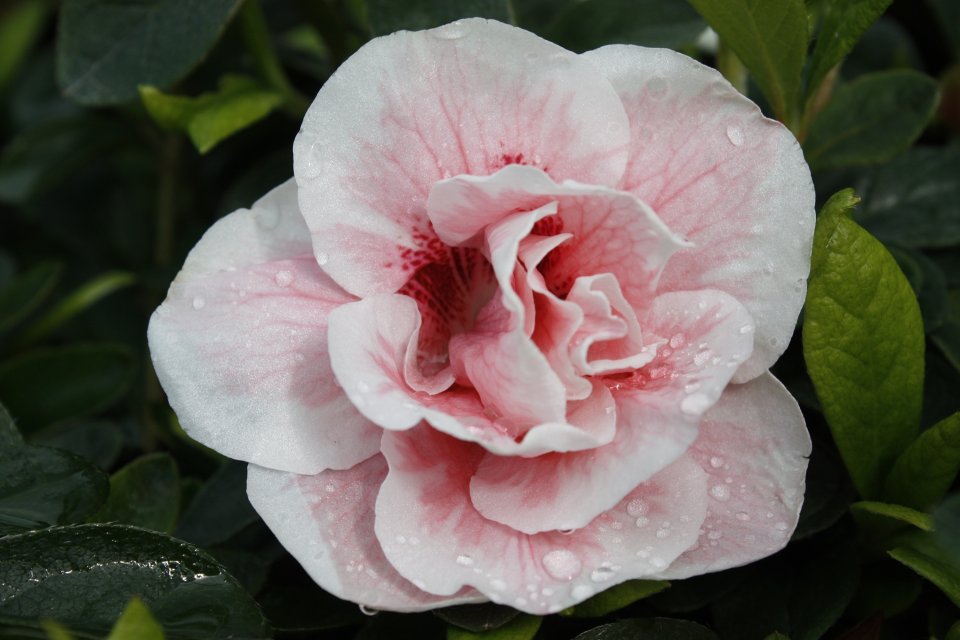
Azalea John Lewellyn
Azalea John Lewellyn is an evergreen azalea grown for its shell-pink double flowers, each with a distinctive wine-spotted throat. The blooms open in spring and build into a generous, layered display. The double form gives each flower more substance and texture than single-flowered types. This azalea develops into a neat, rounded shrub suited to smaller gardens and containers.
John Lewellyn fits well in a cottage garden or a Japanese-style planting. It also works in a mixed shrub border where its soft pink tones complement deeper purples, whites, or creams. Plant this azalea in groups to mass the colour, or use it as a single specimen to anchor a shaded bed.
Grow John Lewellyn in part shade or morning sun with afternoon shade. It requires free-draining, acidic soil enriched with compost. Mulch the root zone to keep the shallow roots cool and retain moisture. Avoid exposed, hot positions, which stress the plant and diminish flowering.
Trim lightly after flowering to maintain shape. Water regularly through the first summer and during dry spells thereafter. Like all azaleas and rhododendrons, this plant is toxic to cats, dogs, and horses if eaten, so take care in households with pets.
Trimming: Trim lightly straight after flowering in late spring to keep the plant compact and well shaped. Azaleas flower on old wood, so avoid cutting back hard. Remove any dead or crossing stems at the same time.
Deadheading: Deadheading is not essential. You can remove spent blooms by hand to tidy the plant, but leaving them does no harm and the plant will continue growing well without it.
Fertilising: Feed in spring with a fertiliser formulated for azaleas, camellias, and rhododendrons. A second light application after flowering encourages strong new growth. Avoid over-feeding, as the shallow root system is sensitive to excess nutrients.
Watering: Keep the soil evenly moist, particularly through summer and dry spells. Water deeply rather than frequently. Mulching over the root zone helps retain moisture and keeps the roots cool.
Pest Control: Watch for aphids, thrips, two-spotted mite, and scale insects. Check the undersides of leaves regularly and treat early with a suitable horticultural oil or approved spray.
Disease Management: Ensure free-draining soil and good airflow around the plant to reduce fungal risk. Wet or heavy soil invites Phytophthora root rot. Clear fallen leaves and spent flowers to limit the conditions that allow petal blight and leaf gall to develop. Pick off any pale swollen galls and dispose of them in the bin, not the compost.
Enjoy complimentary delivery anywhere in mainland New Zealand when you purchase plants worth $250 or more*.
For orders below $250, the following flat-rate delivery charges are applicable:
- Urban delivery within mainland New Zealand: $19.95
- Rural delivery within mainland New Zealand: $39.95
- Waiheke, Chatham and Great Barrier Islands: Please contact us for shipping options.
We aim to have all orders shipped within 14 days from the order date, unless a different shipping date is specified alongside a product.