Salvia involucrata Bethelli
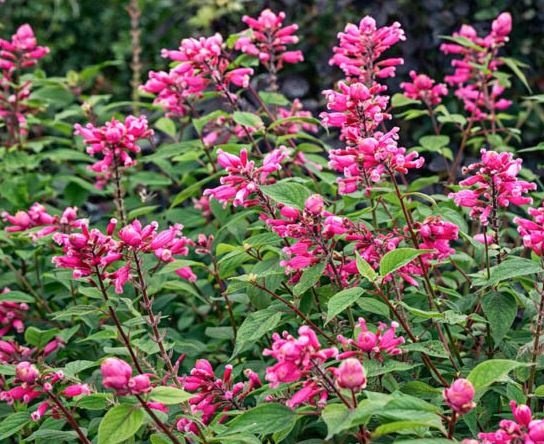
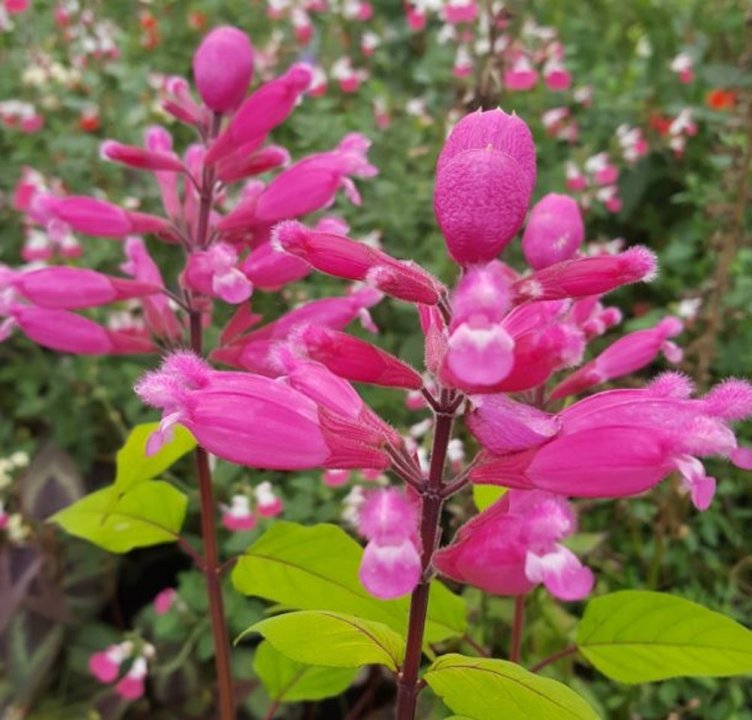
The buds are the reason for the common name. Rosebud sage carries fat rounded magenta-pink buds clustered at the tip of each spike, and they hold that tight rosebud shape for weeks before opening into long tubular flowers of the same strong pink. Salvia involucrata 'Bethellii' has large soft green leaves on upright stems. Flowering starts in December and runs into June in warm districts.
Colour that late in the season is worth having, and this plant supplies it in quantity. Use it towards the back of a border, in a subtropical or courtyard scheme, or in a large container in a sheltered spot. It sits well with bronze and dark foliage that stops the pink looking sweet. Bees and butterflies work the flowers steadily.
Give it full sun to light shade in moist, free-draining soil, sheltered from cold wind. It is hardy through the north and in mild coastal gardens, but in colder inland and southern districts it needs a thick winter mulch over the crown or a container that can be moved. Stake the new shoots in spring, as the stems get top heavy once the buds form.
Grows 1 to 1.5 m tall with a spread of 0.5 to 1 m.
Trimming: Cut the plant to ground level in winter once flowering finishes, and divide the clump at the same time if it needs it. Put stakes or a support ring in place as the spring shoots come through rather than trying to prop it up later.
Deadheading: Take spent spikes off at the base as they go over. It keeps new buds coming and the plant flowers noticeably longer for it.
Fertilising: Apply a balanced fertiliser in early spring with a compost mulch, and a second light feed in midsummer. Rosebud sage grows fast and flowers late, so it uses what it is given.
Watering: Keep the soil moist through summer. This is a leafy salvia rather than a dry-garden one, and it wilts quickly in a hot dry spell, though it recovers once watered.
Pest Control: Whitefly and aphids on the soft foliage are the usual issues, worse in a still sheltered position. Slugs and snails go for the new spring shoots after cutting back.
Disease Management: Powdery mildew is common on this species in late summer, showing as a dusty coating over the large leaves. Give plants room, water the ground rather than the foliage, and remove badly affected leaves.
Enjoy complimentary delivery anywhere in mainland New Zealand when you purchase plants worth $250 or more*.
For orders below $250, the following flat-rate delivery charges are applicable:
- Urban delivery within mainland New Zealand: $19.95
- Rural delivery within mainland New Zealand: $39.95
- Waiheke, Chatham and Great Barrier Islands: Please contact us for shipping options.
We aim to have all orders shipped within 14 days from the order date, unless a different shipping date is specified alongside a product.