Primula vulgaris
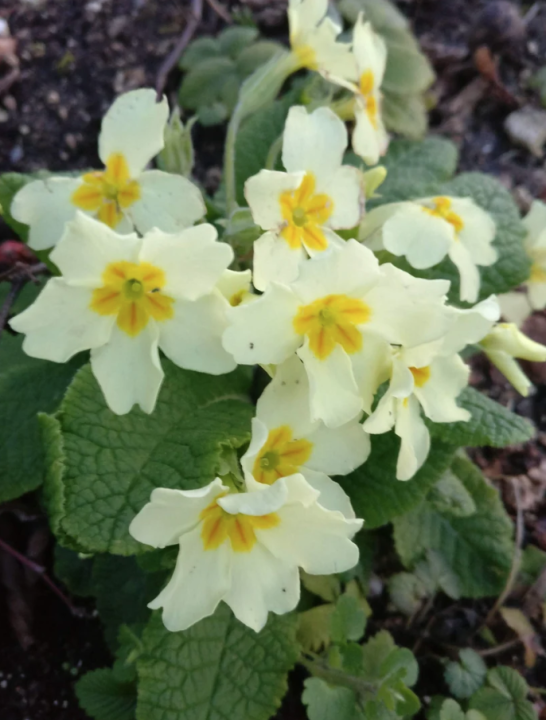
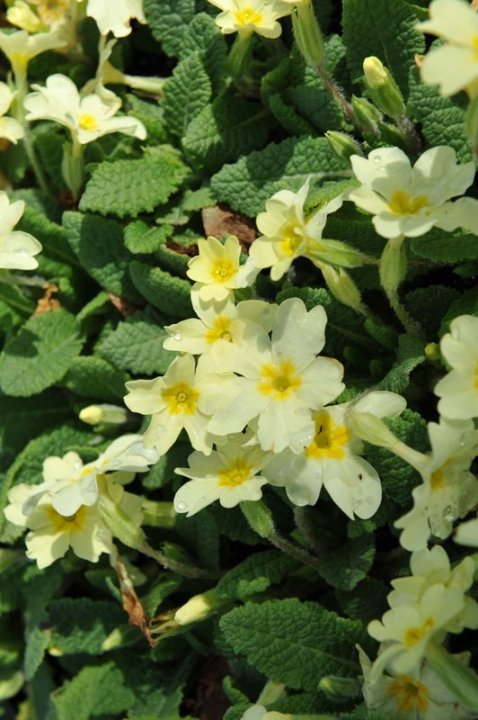
Primula vulgaris is the common primrose, and it flowers when almost nothing else in the garden is doing anything. Pale yellow flowers with a deeper eye sit singly on short stems, just above a flat rosette of crinkled tongue-shaped leaves. Flowering starts in July and runs through to October, carrying a garden from midwinter into spring. The scent is faint but real on a still day.
Primroses belong in shade and in numbers. Plant them under deciduous trees, along a shaded path, at the foot of a hedge, or at the front of a woodland border where they seed about gently and form drifts. They suit a shallow bowl or a windowbox by a back door, where the flowers are seen at close range in winter.
Part to full shade, in soil that holds moisture through summer and does not bake hard. Primula struggles in dry shade, so improve thin soils with compost and mulch with leaf mould or fine bark. It grows well through most of New Zealand and is best in cooler districts. Space 20 to 25 cm apart. Slugs and snails are the main threat to young plants.
A low rosette around 0.15 to 0.2 m tall and 0.25 m across, thickening slowly into a clump.
Trimming: Very little cutting is needed. Pull off yellowing outer leaves through the year to keep the crown open and reduce slug shelter. Lift and divide clumps immediately after flowering finishes in October, splitting them into single crowns and replanting straight away so the roots do not dry out.
Deadheading: Pick spent flowers off at the base of the stalk to keep the plant flowering longer through the season. Leave the last flush to set seed if a drift is wanted, as primroses seed themselves into shaded ground readily and the seedlings come true enough to be useful.
Fertilising: Apply a balanced slow-release fertiliser in early autumn as growth restarts after summer, which is when the plant is building for its winter flowering. A leaf mould or compost mulch each autumn does more for a primrose than any fertiliser, because the plant wants a cool moist root run.
Watering: Summer is the difficult season, not winter. Keep the soil moist through January and February when the plant is dormant but the roots are still alive, as a primrose that bakes dry in summer often fails to appear the following winter. Mulching is the practical answer.
Pest Control: Slugs and snails are the significant pest, working on the rosette through the damp months when the plant is in growth. Control them from autumn onwards. Vine weevil larvae can eat the roots of container plants and are treated with a soil-applied product.
Disease Management: Botrytis marks the flowers and leaves in still damp conditions, and is managed by removing dead material and thinning surrounding planting. Root rot follows waterlogging. Leaf spot is cosmetic and disappears with better airflow around the crown.
Enjoy complimentary delivery anywhere in mainland New Zealand when you purchase plants worth $250 or more*.
For orders below $250, the following flat-rate delivery charges are applicable:
- Urban delivery within mainland New Zealand: $19.95
- Rural delivery within mainland New Zealand: $39.95
- Waiheke, Chatham and Great Barrier Islands: Please contact us for shipping options.
We aim to have all orders shipped within 14 days from the order date, unless a different shipping date is specified alongside a product.