
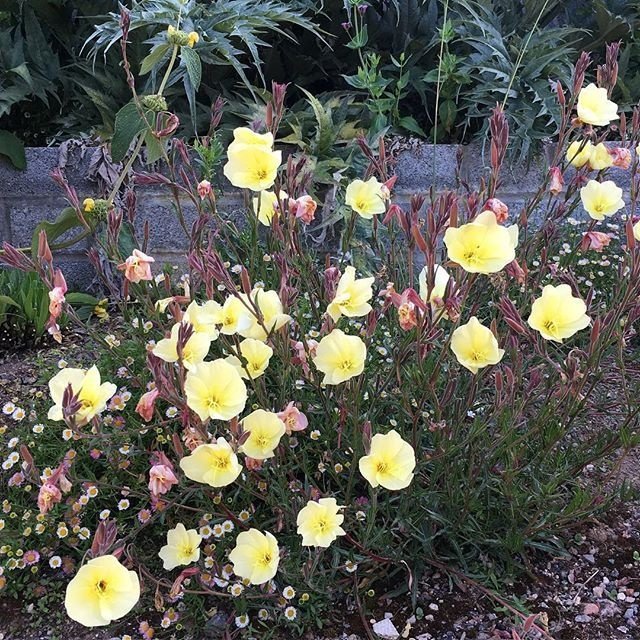
Oenothera odorata Sulphurea
This evening primrose does its best work at the end of the day. Red-tinted buds open at dusk into large lemon-yellow cups, scented enough to carry across a still evening, and each flower then ages through apricot to a soft orange-pink before it drops. Because flowers open in sequence, a plant shows all those stages at once on slim upright stems. Flowering runs December to May.
Plant it where people sit outside in the evening: beside a deck, along a path to the back door, or under a window that gets opened on warm nights. It suits cottage gardens, gravel gardens and dry banks, and the long season means it carries a border well past midsummer. Moths and night-flying insects work the flowers after dark.
Full sun and free-draining soil are all it asks, and poor stony ground gives sturdier stems than a rich bed. It is short lived, usually two or three good seasons, and keeps itself going by seeding freely, so leave a few pods to ripen if you want it to stay. Space plants 40 cm apart and expect volunteers nearby.
Reaches around 0.6 to 0.75 m tall with a spread of 0.3 to 0.5 m.
Trimming: Cut spent flowering stems back to the base as they finish, which keeps new ones coming through autumn. Take the whole plant down in late autumn once it browns off.
Deadheading: Deadhead through summer to extend the display. Stop in autumn and let the last pods ripen, since seedlings are how this plant replaces itself and the parent will not last long.
Fertilising: Little to none. A light general fertiliser at the start of spring suits poor soil, and richer feeding produces tall soft stems that flop after rain.
Watering: Water while establishing in the first season, then leave it to rainfall. It handles dry ground well and dislikes soil that stays wet over winter.
Pest Control: Aphids gather on the flower buds and hose off. Slugs and snails take young rosettes in a wet spring, which matters most on new plants.
Disease Management: Powdery mildew can grey the lower leaves late in a humid season. Space plants for airflow and remove the worst foliage. Root rot follows waterlogged winter soil.
Enjoy complimentary delivery anywhere in mainland New Zealand when you purchase plants worth $250 or more*.
For orders below $250, the following flat-rate delivery charges are applicable:
- Urban delivery within mainland New Zealand: $19.95
- Rural delivery within mainland New Zealand: $39.95
- Waiheke, Chatham and Great Barrier Islands: Please contact us for shipping options.
We aim to have all orders shipped within 14 days from the order date, unless a different shipping date is specified alongside a product.