Hosta Aphrodite
 Notify Me
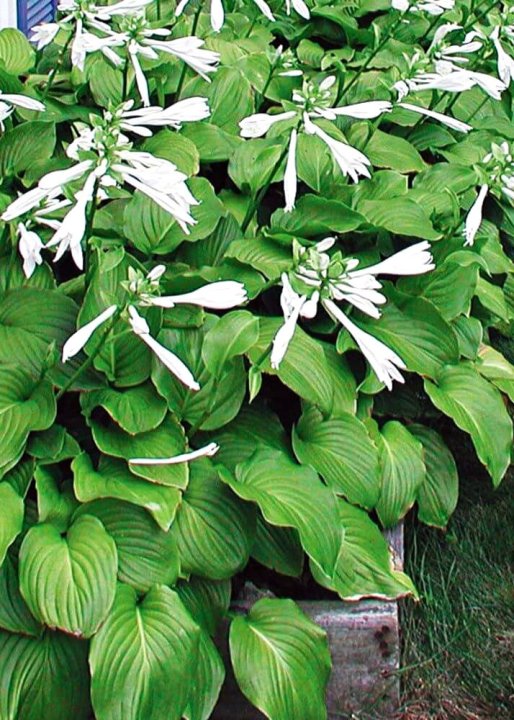
Hosta Aphrodite is a captivating perennial known for its large, glossy, heart-shaped leaves and highly fragrant, pure white flowers. The flowers, which resemble those of a gardenia, appear in late summer to early autumn and are held on tall, sturdy stems above the lush foliage. This hosta is particularly prized for its beautiful flowers and delightful scent, making it a standout addition to any shaded garden.
In the garden, Hosta Aphrodite is perfect for shaded borders, woodland gardens, and containers. It thrives in cottage, contemporary, and traditional garden styles, adding a touch of elegance and fragrance. This plant prefers partial to full shade and grows best in rich, well-drained soil with consistent moisture. Regular watering is essential, especially during dry periods, to maintain its lush growth and prolific flowering. Space plants about 60 to 90 cm apart to allow them to form a dense, attractive clump.
Hosta Aphrodite typically reaches a mature height of 45 to 60 cm with a spread of 60 to 90 cm. Its broad, arching leaves and stunning, fragrant flowers provide continuous interest and beauty in the garden. The combination of its luxurious foliage and delightful flowers ensures that Hosta Aphrodite remains a focal point in any landscape, offering visual appeal and a sweet fragrance throughout the growing season.
Trimming: Trim back the foliage of Hosta Aphrodite in late autumn after the leaves have died back. Remove any dead or damaged leaves during the growing season to maintain a neat appearance.
Deadheading: Remove spent flower stalks after flowering to encourage further flowering and to keep the plant tidy.
Fertilising: Apply a balanced, slow-release fertiliser in early spring as new growth begins. Follow the manufacturer's instructions for the correct dosage to support vigorous growth and abundant flowering.
Watering: Water regularly, especially during dry periods, to keep the soil consistently moist but not waterlogged. Hosta Aphrodite prefers well-drained soil to prevent root rot.
Pest Control: Watch for slugs and snails, which are common pests for Hostas. Use slug pellets, traps, or barriers to control them. Check for aphids and treat infestations with insecticidal soap or neem oil.
Disease Management: Hosta Aphrodite is generally disease-resistant but can be susceptible to fungal diseases like leaf spot and crown rot. Ensure good air circulation around the plant and avoid overhead watering. Remove and destroy any affected leaves and treat with a fungicide if necessary. Maintain good garden hygiene to minimise disease risk.
Enjoy complimentary delivery anywhere in mainland New Zealand when you purchase plants worth $250 or more*.
For orders below $250, the following flat-rate delivery charges are applicable:
- Urban delivery within mainland New Zealand: $19.95
- Rural delivery within mainland New Zealand: $39.95
- Waiheke, Chatham and Great Barrier Islands: Please contact us for shipping options.
We aim to have all orders shipped within 14 days from the order date, unless a different shipping date is specified alongside a product.