Erysimum Pastel Patchwork
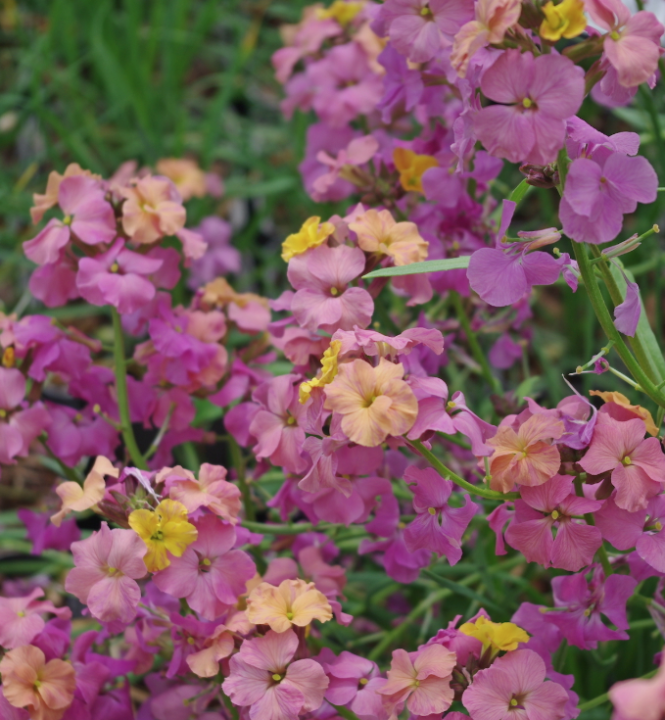
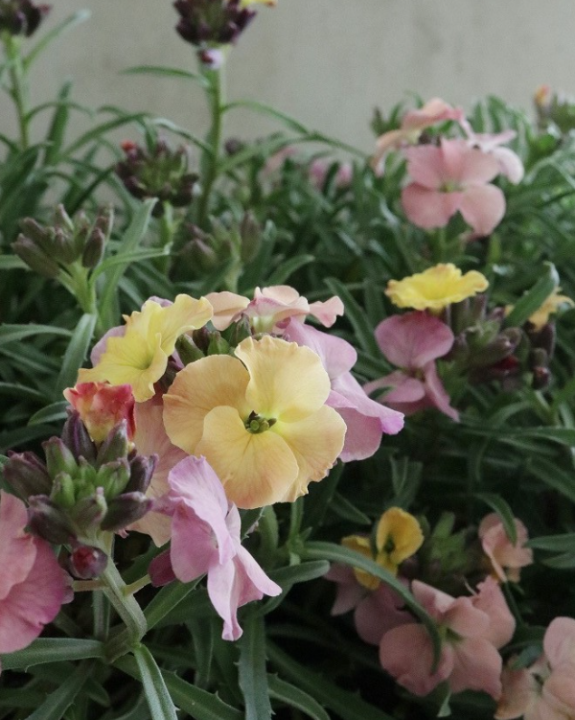
Flowers that change colour as they age give Erysimum 'Pastel Patchwork' its name. Each spike opens cream and apricot then deepens through pink to mauve, so a single stem carries several shades at once and the plant as a whole reads as a patchwork. This perennial wallflower is evergreen, shrubby at the base, and flowers over a long stretch from September through to March.
Wallflowers do their best work at the front of a sunny border or spilling over a low wall, and this one keeps its shape well enough for a container beside a door. The long season makes it useful in a small garden where every plant has to earn more than one month. Bees and butterflies use the flowers constantly.
Full sun and sharp drainage. Erysimum is short-lived by nature, three or four years at best, and the quickest way to lose one is rich wet soil. Poor gritty ground gives the longest life. It grows well right through New Zealand and takes coastal wind and salt without complaint. Take a few cuttings each summer so a replacement is always coming along.
A rounded evergreen mound around 0.5 to 0.6 m tall and 0.6 m across, in flower for most of the year and never bare.
Trimming: Clip the whole plant over by about a third in early autumn, cutting into soft growth only. Never cut back into bare woody stems, because wallflowers do not reshoot from old wood and a hard cut usually kills the plant. Light regular trimming keeps the mound dense and delays the point where it goes leggy.
Deadheading: Run over the plant every couple of weeks taking off finished spikes at their base. This is what keeps a perennial wallflower flowering for six months rather than two, and it also stops the plant exhausting itself setting seed.
Fertilising: Almost nothing is required. A light dressing of balanced slow-release fertiliser in early spring is enough, and rich feeding shortens the plant's life by producing soft growth. Do not mulch up against the woody base.
Watering: Water regularly through the first summer only. After that, Erysimum prefers to be kept on the dry side, and established plants come through long dry spells without help. Container plants need more attention but should still be allowed to dry between waterings.
Pest Control: Cabbage white butterfly caterpillars will chew the leaves, as wallflowers belong to the brassica family. Pick them off or use a caterpillar-specific spray. Aphids gather on soft new growth and wash off with water.
Disease Management: Club root and downy mildew can affect wallflowers grown in wet ground or planted repeatedly in the same brassica bed. Rotate the position when replacing plants, keep drainage sharp, and remove any plant that suddenly wilts.
Enjoy complimentary delivery anywhere in mainland New Zealand when you purchase plants worth $250 or more*.
For orders below $250, the following flat-rate delivery charges are applicable:
- Urban delivery within mainland New Zealand: $19.95
- Rural delivery within mainland New Zealand: $39.95
- Waiheke, Chatham and Great Barrier Islands: Please contact us for shipping options.
We aim to have all orders shipped within 14 days from the order date, unless a different shipping date is specified alongside a product.