Echinops Blue Globe
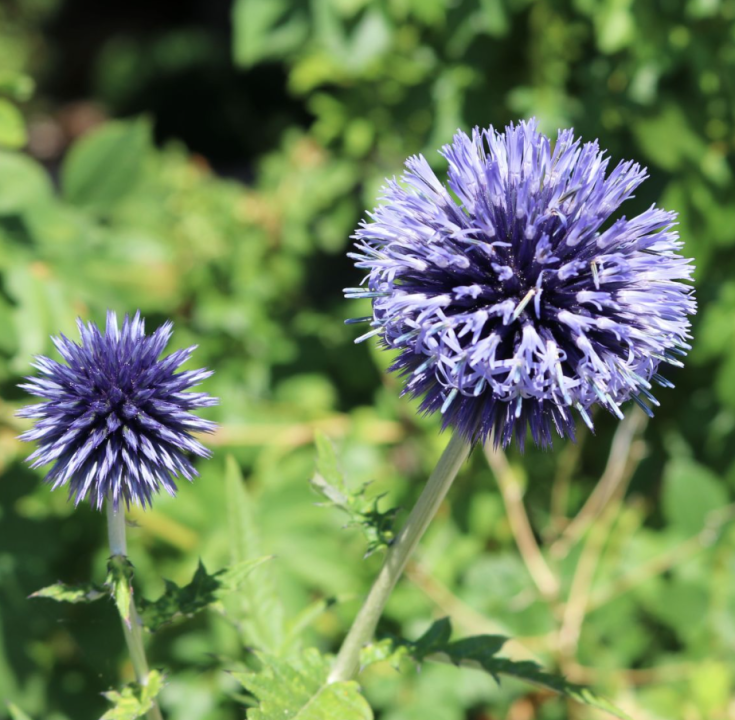
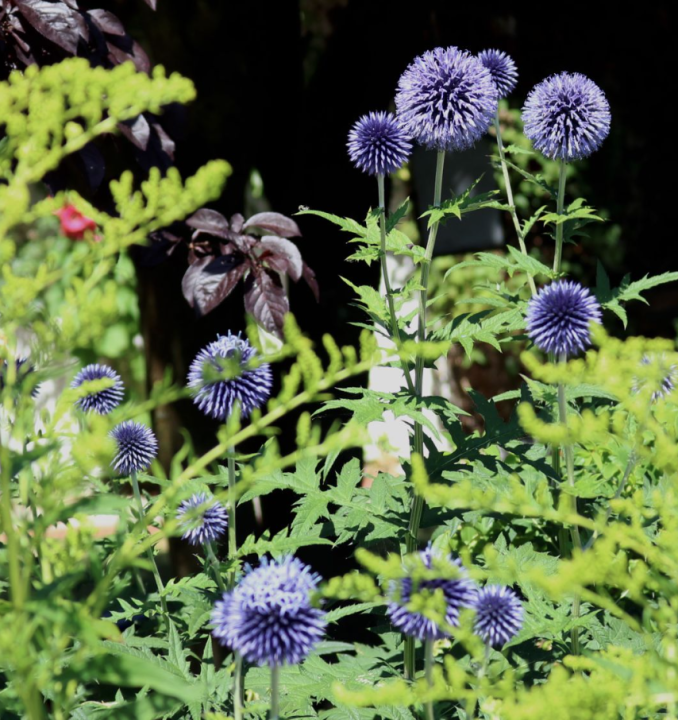
Round steel-blue flower heads sit on grey stems above jagged, thistle-like foliage on Echinops 'Blue Globe'. The globe thistle opens its heads from February and keeps going into April, each one a tight sphere of tiny florets that bees work over for weeks. The leaves are deeply cut, dark green above and grey-felted beneath, with small spines along the margins.
Globe thistle belongs in a dry sunny border alongside grasses, sedums, achillea and other plants that ask for the same conditions. It stands upright without staking, which is unusual at this height. The heads dry well and keep their shape and colour, so they stay useful in arrangements long after the garden season ends.
Free-draining soil is not optional here. Echinops rots in heavy wet ground, and NZ growers get the best results by mixing gravel or grit through the planting hole on clay sites. Give it full sun. It handles dry conditions once established, so it settles on a dry bank or a thin new-build soil where little else will. Space around 0.6 m apart. The foliage is prickly, so wear gloves when cutting back.
The clump reaches 1 to 1.2 m tall and about 0.7 m across, dying back to a low rosette over winter.
Trimming: Cut stems down to the basal rosette in late autumn once the heads have finished, wearing gloves because the dried foliage is sharp. Cutting the whole plant back by half in early December produces a shorter, later-flowering clump if height is a problem. Divide every four or five years in early spring, using a spade through the crown.
Deadheading: Cut heads for drying just as the blue colour reaches full strength and before the florets open fully, which is when they hold colour best. Removing spent heads before seed ripens stops self-sown seedlings appearing through the border.
Fertilising: Very little is needed. A light application of balanced slow-release fertiliser in early spring is plenty, and rich soil produces floppy stems that need staking. Skip the mulch against the crown, which encourages rot in a plant that wants dry conditions at the base.
Watering: Water through the first summer to get the deep taproot down, then leave the plant to fend for itself except in prolonged drought. Established globe thistle is one of the more drought-tolerant perennials available, and overwatering does more harm than underwatering.
Pest Control: Aphids sometimes cluster under the flower heads in warm weather and can be washed off with a jet of water. Bees and hoverflies work the flowers heavily, so avoid spraying insecticide while the heads are open.
Disease Management: Crown and root rot in wet winter soil is the main risk, and drainage is the whole answer. Powdery mildew can mark the lower leaves late in a humid season. Remove affected foliage and thin surrounding planting to improve airflow.
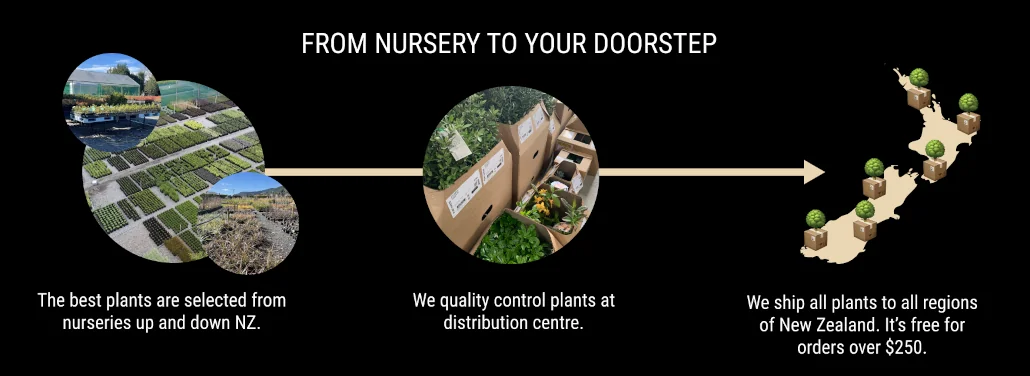
Enjoy complimentary delivery anywhere in mainland New Zealand when you purchase plants worth $250 or more*.
For orders below $250, the following flat-rate delivery charges are applicable:
- Urban delivery within mainland New Zealand: $19.95
- Rural delivery within mainland New Zealand: $39.95
- Waiheke, Chatham and Great Barrier Islands: Please contact us for shipping options.
We aim to have all orders shipped within 14 days from the order date, unless a different shipping date is specified alongside a product.