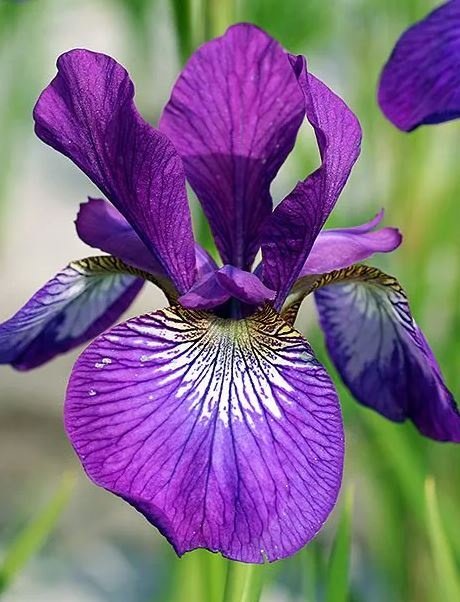
Iris s. Wine Wings
 Notify Me
Wine red is a rare colour among Siberian iris, which run mostly to blues, purples and whites. 'Wine Wings' was raised by Steve Varner in the United States and registered in 1976, and it holds violet-red standards over falls of the same deep wine tone, with the flowers carried lightly on slim stems. Fine upright grassy foliage sits below. It flowers from November.
The colour does something no blue iris can, sitting well against bronze foliage, warm-toned grasses and apricot or cream flowers. Grow it through a border, beside a pond, or in a cutting bed. The narrow leaves stay tidy through summer long after the flowers have gone, which is more than most perennials manage.
Sun or dappled shade suits it, in soil kept moist through summer. Siberian iris are the most forgiving group in the genus and this one asks nothing unusual: shallow planting, 45 cm between plants, a mulch to hold moisture, and division after flowering every few seasons. It resents being left to dry out in high summer.
Siberian iris of this type generally reach 0.6 to 0.9 m in flower.
Trimming: Cut the flower stems away at ground level when flowering ends. Trim leaves back to a hand's width in late autumn. When the clump develops a bare middle, lift it after flowering and replant the vigorous outer sections.
Deadheading: Not essential. Siberian flowers fade neatly and the pods that follow have their own value, so many gardeners leave a few and remove the rest.
Fertilising: One application of general fertiliser in September is all it needs. Compost spread over the root area does as much good as a second feed would.
Watering: Keep the roots moist from spring through flowering. Siberians survive dry spells but flower far better with steady water, and a dry November shows up directly in the number of buds.
Pest Control: Aphids appear on flower stems in warm weather and wash off with a hose. Soft spring growth is taken by slugs and snails, as with any iris.
Disease Management: Rusty pustules on the leaf blades mean rust, and brown blotches mean leaf spot. Both turn up in humid conditions and both respond to removing affected foliage and an autumn clean-up.
Enjoy complimentary delivery anywhere in mainland New Zealand when you purchase plants worth $250 or more*.
For orders below $250, the following flat-rate delivery charges are applicable:
- Urban delivery within mainland New Zealand: $19.95
- Rural delivery within mainland New Zealand: $39.95
- Waiheke, Chatham and Great Barrier Islands: Please contact us for shipping options.
We aim to have all orders shipped within 14 days from the order date, unless a different shipping date is specified alongside a product.