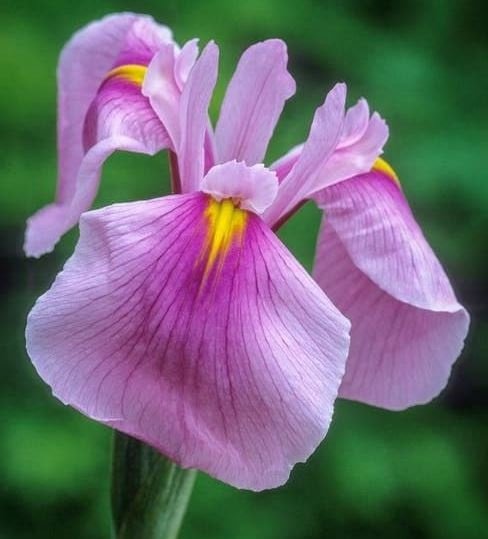
Iris Rose Queen
 Notify Me
Soft rose-pink is uncommon in a water iris and it is the whole appeal of 'Rose Queen'. The flowers of this Iris ensata are broad and semi-double, opening rose-pink with darker veining and a yellow-green signal, then fading paler as they age, so a clump carries several tones. Petals droop gently rather than standing upright, which suits the colour. Flowering is December into January.
Pale pink beside water is a quieter effect than the purples most people plant, and it works well in a naturalistic pond edge or a damp woodland-edge border. Plant it in groups rather than singly, or grow it in a wide pot that can be kept standing wet through summer. The flowers cut well when taken in bud.
Heavy soil suits this one: a clay-loam that holds water right through the growing season and stays acid to neutral. Do not lime it. Keep it wet while in growth and let it dry off somewhat once the foliage dies down in autumn, as sitting in cold water all winter rots the rhizome. Split the clump every few years towards the end of summer.
The flower stems stand 0.9 to 1 m over a clump roughly 0.6 m wide.
Trimming: Cut spent flower stems right down once the last bud has opened and gone over. Trim the browned foliage back hard in late autumn. Divide crowded clumps in summer, cutting the rhizome into pieces with three or four fans.
Deadheading: Remove each flower as it finishes, since the large soft petals do not drop cleanly and hang on looking tired. This makes a noticeable difference on a pale cultivar.
Fertilising: Japanese iris need real feeding. Scatter a controlled-release feed as growth begins, top it up when buds appear, and mulch. Choose an acid-friendly product and avoid anything containing lime.
Watering: Water heavily from spring until flowering finishes. A plant short of water in November and December will flower poorly no matter how well it is fed. Ease back through autumn.
Pest Control: Snails and slugs damage new shoots and buds in the damp ground this iris wants. Clear leaf litter around the crowns in late winter to reduce their shelter.
Disease Management: Humid weather brings both leaf spot and rust, and both are managed the same way: remove marked leaves, strip the clump of dead foliage at the end of the season, and bin it rather than composting.
Enjoy complimentary delivery anywhere in mainland New Zealand when you purchase plants worth $250 or more*.
For orders below $250, the following flat-rate delivery charges are applicable:
- Urban delivery within mainland New Zealand: $19.95
- Rural delivery within mainland New Zealand: $39.95
- Waiheke, Chatham and Great Barrier Islands: Please contact us for shipping options.
We aim to have all orders shipped within 14 days from the order date, unless a different shipping date is specified alongside a product.