Fig Candy
 Notify Me
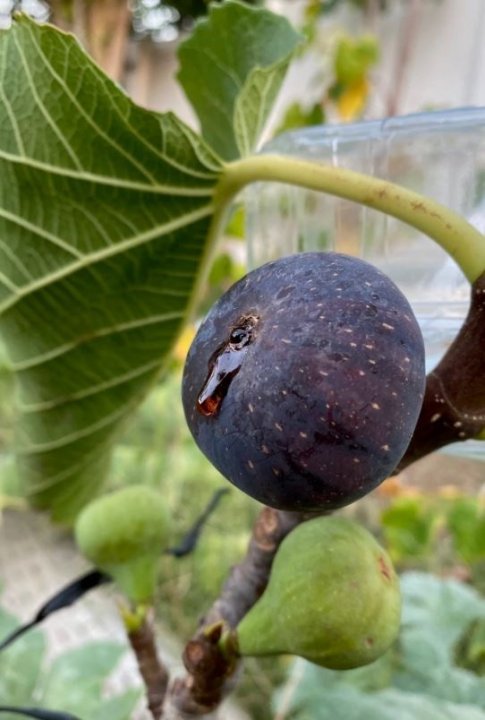
Cut a ripe 'Candy' fig in half and the contrast is the selling point: a green-gold skin around deep red, honey-sweet flesh. The fruit is medium sized and bell-shaped, and the flavour is sugary rather than sharp, which makes it one of the better figs to eat straight off the tree. Large lobed leaves sit on a spreading deciduous frame that gives real shade in summer.
A fig earns its place twice over, as a crop and as a shade tree. Plant one where you want a low canopy over a seat or a courtyard, against a warm wall for earlier fruit, or in a large container on a paved area. Container growing suits figs well, because restricting the roots slows leafy growth and pushes the plant into fruiting.
Figs want the hottest, sunniest spot you have and free-draining soil. Warm districts give the most reliable crop, and in cooler areas a north-facing wall makes the difference. It is self-fertile, so one tree is enough. Restrict the roots with a buried container or a paving slab under the planting hole if you want fruit rather than growth. Established trees handle frost while dormant.
Reaches around 3 to 5 m tall and wide over seven to ten years, easily pruned smaller.
Trimming: Prune in late winter while dormant, taking out dead and crossing wood and shortening long shoots to keep the tree within reach. Figs fruit on both old and new wood, so avoid cutting everything back hard in one go. A summer tip prune helps set fruit for next season.
Fertilising: Feed lightly in early spring with a balanced fruit tree fertiliser and again after the main harvest. Do not overfeed with nitrogen, which produces large leaves and little fruit. Mulch with compost, keeping it off the trunk.
Watering: Water regularly and deeply while the fruit is swelling, as uneven watering causes splitting and dropping. Ease off as the crop ripens for better flavour. Container trees need daily attention through summer.
Pest Control: Birds are the main competition and netting is the only reliable answer. Watch for scale insects on stems and spider mites on leaves in dry weather, both treated with horticultural oil. Fruit fly can affect ripening fruit in warmer districts.
Disease Management: Fig rust shows as yellow-brown spots on the leaves and early leaf drop in humid summers. Clear and bin fallen leaves rather than composting them, and keep the canopy open. Root rot follows poor drainage.
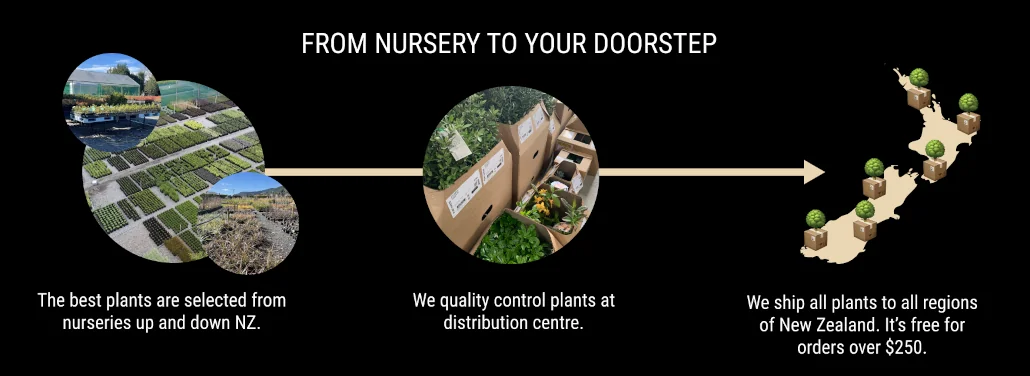
Enjoy complimentary delivery anywhere in mainland New Zealand when you purchase plants worth $250 or more*.
For orders below $250, the following flat-rate delivery charges are applicable:
- Urban delivery within mainland New Zealand: $19.95
- Rural delivery within mainland New Zealand: $39.95
- Waiheke, Chatham and Great Barrier Islands: Please contact us for shipping options.
We aim to have all orders shipped within 14 days from the order date, unless a different shipping date is specified alongside a product.